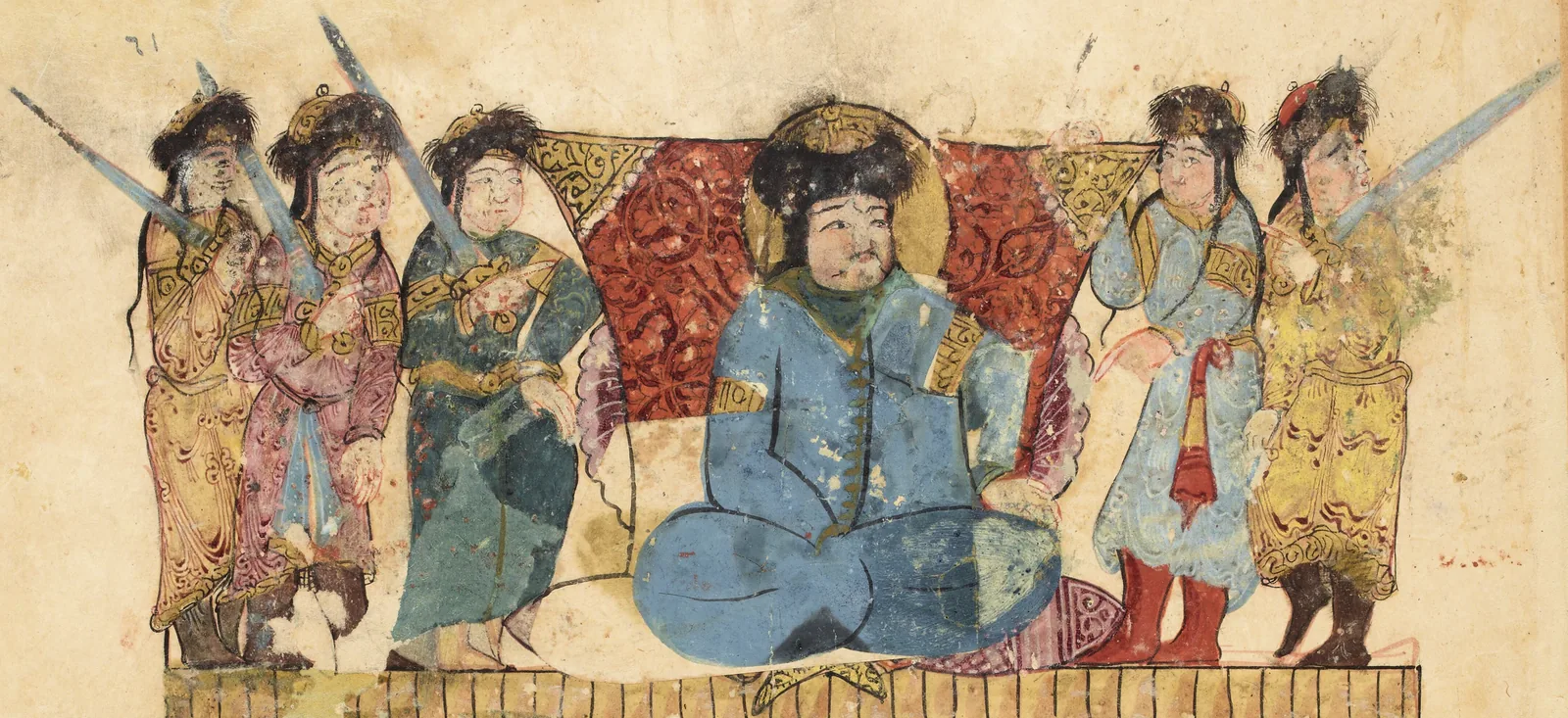
Al-Walid ibn al-Mughira sat alone while all of Quraysh waited for his verdict. He was no fool and no hothead. He was the master of his tribe, a man of experience, wealth, and a word nobody argued with. He heard the Quran and it shook him. Then he turned to his mind and put it to work: he went through the possibilities one by one, weighed what he might say, and calculated how each phrase would land before speaking it. That, by our definition today, is "thinking" at its best: gather the data, weigh the options, estimate the consequences, decide.
The Quran recorded that moment with precision: "He thought and he calculated — doomed is he, how he calculated! Again, doomed is he, how he calculated! Then he looked, then he frowned and scowled, then he turned away in arrogance" (al-Muddaththir 74:18–23). The verses do not describe an idiot who switched his brain off. They describe a complete mental process: thinking, then estimating, then reviewing, then deciding. The calculating machine in al-Walid's head was working perfectly. The fault was not in the machine but in the direction. All that horsepower served one small question: what can I say against this Quran without losing my status?
That is where our question begins. If "thinking" at that level of technical perfection was condemned, what exactly was the Quran praising when it called, again and again, for tafakkur — deep reflection? And where do we stand today, we and our intelligent machines, between the two words?
One word, used once — in blame
The root f-k-r ("to think") appears in the Quran exactly eighteen times, no more and no less. Seventeen use the reflective form: yatafakkarun ("they reflect") eleven times, tatafakkarun three times, yatafakkaru twice — "Have they not reflected within themselves?" (30:8) and "Have they not reflected? Their companion is not mad" (7:184) — and tatafakkaru once: "that you stand up for God, in pairs or alone, and then reflect" (34:46). Every one of them comes as praise or encouragement: "In that are signs for people who reflect" (13:3); "and they reflect on the creation of the heavens and the earth" (3:191); "these parables We set forth for people, so that they may reflect" (59:21). One occurrence remains, with the bare verb fakkara — "he thought." It is the verse about al-Walid, and it is the only one that comes in blame.
This is not a coincidence of wording. Arabic verb forms draw a clear line here. Fakkara is an act that happens and ends. Tafakkara implies effort, duration, staying with something. Al-Walid thought for an hour and walked away; tafakkur is a state that stays with a person — "standing, sitting, and lying on their sides." The first is a tool you pick up when needed. The second is a trait you build.
Then look at what the Quran asks us to reflect on: the creation of the heavens and the earth, our own selves, the signs, the parables. It never calls for tafakkur about a business deal or a battle plan — legitimate things to think about, certainly. Because tafakkur is not just using your mind. It is using your mind on what lies beyond the problem: its meaning, its purpose, where it leads. That is why reflection is paired with the remembrance of God in the verse of Al Imran: a working mind and a present heart. Al-Walid had the working mind. His heart was somewhere else.
What turns thinking into reflection?
Our classical scholars spent real time on this. Al-Ghazali gave it an entire book inside The Revival of the Religious Sciences, "The Book of Tafakkur." He defined thought as bringing two known things together in the heart to produce a third, close to what we would now call reasoning. But he did not stop at the mechanism; the whole book runs through the fields of reflection: God's blessings, the self, the shortness of life. Ibn al-Qayyim went further in Miftah Dar al-Sa'ada, making reflection the first link in a chain that ends in action: reflection produces knowledge, knowledge produces a state in the heart, that state produces will, and will produces action.
But thinking itself, before we even reach reflection, comes in degrees — and the lowest barely deserves the name. At the bottom sits something like a reflex: an answer that jumps to the tongue before it passes through any deliberation, the way a knee kicks at the doctor's hammer. Our stock replies and ready-made judgments run on this setting, and most of us spend most of our day there. One step up is the thinking of "driving without a destination": a mind that spins, processes, burns fuel, and is headed nowhere in particular. Related to it is "reading without understanding": the eye moves down the lines, pages get finished, and if you ask the reader what they just read, they cannot really tell you. All of this counts as "thinking" in the loose sense, but it is processing without presence: the machine runs while its owner is absent. Above these comes deliberate, organized thinking — al-Walid's kind, the highest the machine alone can reach. The top of the ladder is reached only when the owner shows up in his own thinking. That is when it becomes tafakkur.
The difference shows in three marks. First, the subject: thinking handles whatever is put in front of it; reflection turns to the big questions — creation, the self, meaning, destiny. Second, the presence of the self: thinking can run while you are completely absent from yourself; reflection starts from the inside — "Have they not reflected within themselves?" The reflecting person is a party to the question, not a neutral observer; he knows the answer will bind him before anyone else. Third, the fruit: thinking ends in a result or a decision; reflection ends in a change in the person: awe, gratitude, certainty. "Our Lord, You did not create this in vain; glory be to You, so protect us from the punishment of the Fire." Al-Walid came out of his thinking with a well-calculated soundbite. The people of understanding came out of their reflection with a prayer, and with trembling.
System 1, System 2... so where is the third?
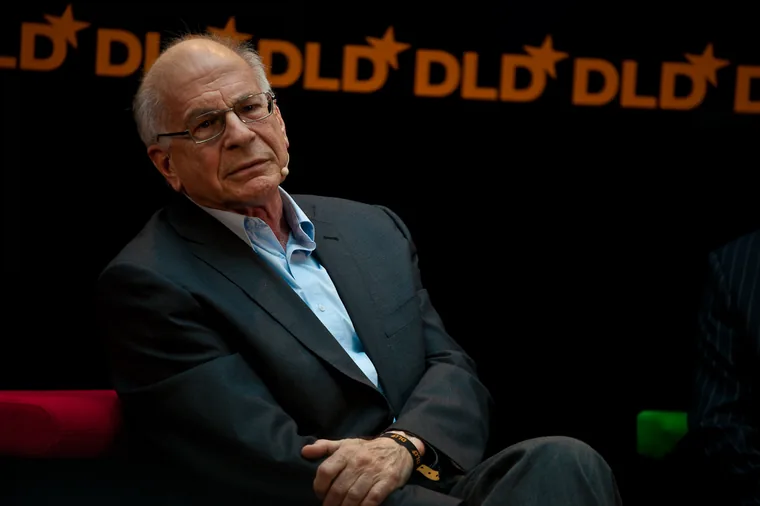
In recent decades, cognitive psychology took "thinking" apart, and the most famous result is Nobel laureate Daniel Kahneman's Thinking, Fast and Slow. Kahneman split the mind into two systems. System 1 is fast, intuitive, and automatic: it reads faces, completes familiar phrases, and fires off instant judgments with no effort. System 2 is slow, effortful, and deliberate: the one you summon for long division, tax forms, or weighing two job offers. Through experiment, Kahneman showed how System 2 gets lazy and hands the verdict to System 1 — which is where the now-famous cognitive biases come from.
Kahneman's two systems are the two ends of the ladder we just described: System 1 is the reflex at the bottom, System 2 the deliberate thinking at the top. But both systems sit inside the circle of "thinking," not beyond it. System 2, for all its slowness and seriousness, is a computational tool whose goal is getting the answer right — and that is precisely what al-Walid was doing when he ran his System 2 at full capacity: he thought, calculated, and reviewed. Psychology measures along the axis of speed, effort, and accuracy. The Quran adds an axis no lab instrument can see: direction, and the presence of the self. Tafakkur is not a "System 3" that is even slower than System 2. It is System 2 freed from serving the small problem and turned toward the big question — with a heart present, knowing the answer will change it.
Contemporary writers have noticed the retreat of this kind of contemplation from a different angle. Nicholas Carr, in The Shallows, argues that the internet, with its constant chopping of attention, is rewiring our brains for skimming and headline-hopping, weakening the muscle of long, connected reading on which all deep thought depends. Cal Newport, in Deep Work, argues that the ability to focus for long stretches without distraction has become one of the rarest and most valuable skills, precisely because digital life pulls everyone the other way. Both describe, in neutral language, what we are describing here in the Quran's language: a human being voluntarily stepping down from reflection to thinking, and from connected thinking to scraps of interrupted processing.
The machine reaches "he thought and he calculated"
Then came the shift that made this old question urgent again. Modern Artificial Intelligence (AI), especially Large Language Models (LLMs), no longer settle for instant answers. The latest generation, the so-called reasoning models, "think" before they answer. They write an internal chain of thought: break the problem down, try a path, see it is a dead end, backtrack, weigh alternatives, and check the answer before delivering it. By Kahneman's standard, this is an explicit imitation of System 2 — except it does not tire, does not get lazy, and works day and night in a thousand languages.
In fact, the Quran's description of al-Walid's mental process works, almost word for word, as a technical description of these models. "He thought": generated the processing steps. "He calculated": weighed the probabilities — and probability-weighing is the very core of how these models work. "Then he looked": reviewed the output. The machine has genuinely reached the stage of "he thought and he calculated." And so the usual question echoes at every conference: has the machine risen to the level of human thinking? When will it surpass it?
Flipping the question
I would argue the question is upside down. Instead of asking whether the machine has climbed up to the human, we should ask: which human did it climb up to? If the machine imitated our thinking this easily, perhaps that is because most of what we practice as "thinking" at work, in school and in our arguments settled long ago at its lowest form: processing information, retrieving patterns, producing expected answers in expected templates. We were not overtaken on a summit we occupied. We were caught up with on a slope we walked down ourselves. The machine did not imitate the human as he was created to be. It imitated the human as he chose to be.
So the real dividing line today is not between a human who thinks and a machine that computes. It runs between three levels: processing, now a cheap and unlimited commodity the machine produces on demand; routine human thinking, now imitable and often beatable; and tafakkur, which remains what it always was — the practice of a few. The irony is that this few no longer has a competitor. The machine does not attempt reflection — not for lack of computing power, but because reflection presupposes a self with a destiny at stake: fear and hope, a sense that time is short, a question about where it all ends. "Have they not reflected within themselves?" means nothing to something with no self to worry about. A machine can write you an eloquent essay on the meaning of death. It will not lie awake tonight thinking about its own. That difference is the whole difference.
There is also an answer here to the anxiety about jobs. Whoever pinned their worth on processing skills, such as drafting, summarizing, calculating and retrieving, is competing with the machine on its home field, and that match is already decided. Whoever built their worth on what reflection produces has a field the machine has not even entered: wisdom in applying knowledge to reality, clear sight about ends and purposes, and the capacity to be changed by what you know rather than merely knowing it.
Reflection as a duty
Which brings us back to where we started: a man in Mecca ran his mind at full efficiency and was ruined, while people who reflect on the creation of the heavens and the earth found their way. The difference was never in the horsepower. It was in the direction, and in whether the owner was present. Today, with processing power available on a monthly subscription, the last excuse for confusing the two has collapsed. "Thinking" is no longer a human badge of honor; the machine does it faster, wider, and cheaper. What remains for the human is the one thing never asked of the machine: to stand, himself, about himself, before the signs, the meaning, and the destination.
Perhaps that is the wisdom in how the Quran treats reflection: not a luxury for philosophers, not a specialty for scholars, but a duty on everyone with a mind — repeated so often it became a refrain of its address: will you not reflect? The question is still open. And the machine, for all its brilliance, will not answer it on anyone's behalf.
Sources
- Abu Hamid al-Ghazali, Ihya Ulum al-Din, including the Book of Tafakkur, the ninth book of the Quarter of Deliverance. Full text at OpenITI.
- Ibn Qayyim al-Jawziyya, Miftah Dar al-Saada wa-Manshur Wilayat al-Ilm wa-l-Irada. Full text at OpenITI.
- Daniel Kahneman, Thinking, Fast and Slow. No free edition; borrowable scan at the Internet Archive.
- Nicholas Carr, The Shallows: What the Internet Is Doing to Our Brains. No free edition; borrowable scan at the Internet Archive.
- Cal Newport, Deep Work: Rules for Focused Success in a Distracted World. No free edition; borrowable scan at the Internet Archive.
This is a translation of an essay written in Arabic. Quotations from the Qurʾān are rendered for sense; the Arabic page carries them in the original.
NEUTRAL FACT CHECKER
The factual claims in this essay were checked independently: the count of the root f-k-r across the whole Quran, al-Ghazali's text in his Book of Reflection, what is attributed to Ibn al-Qayyim, and what is credited to Kahneman, Carr and Newport. The result is published as it came out, and the essay was not edited to agree with it. The fact-check is written in Arabic: read the neutral fact-check →
© 2026 Husain Alkhaldy — published in the site's essays.