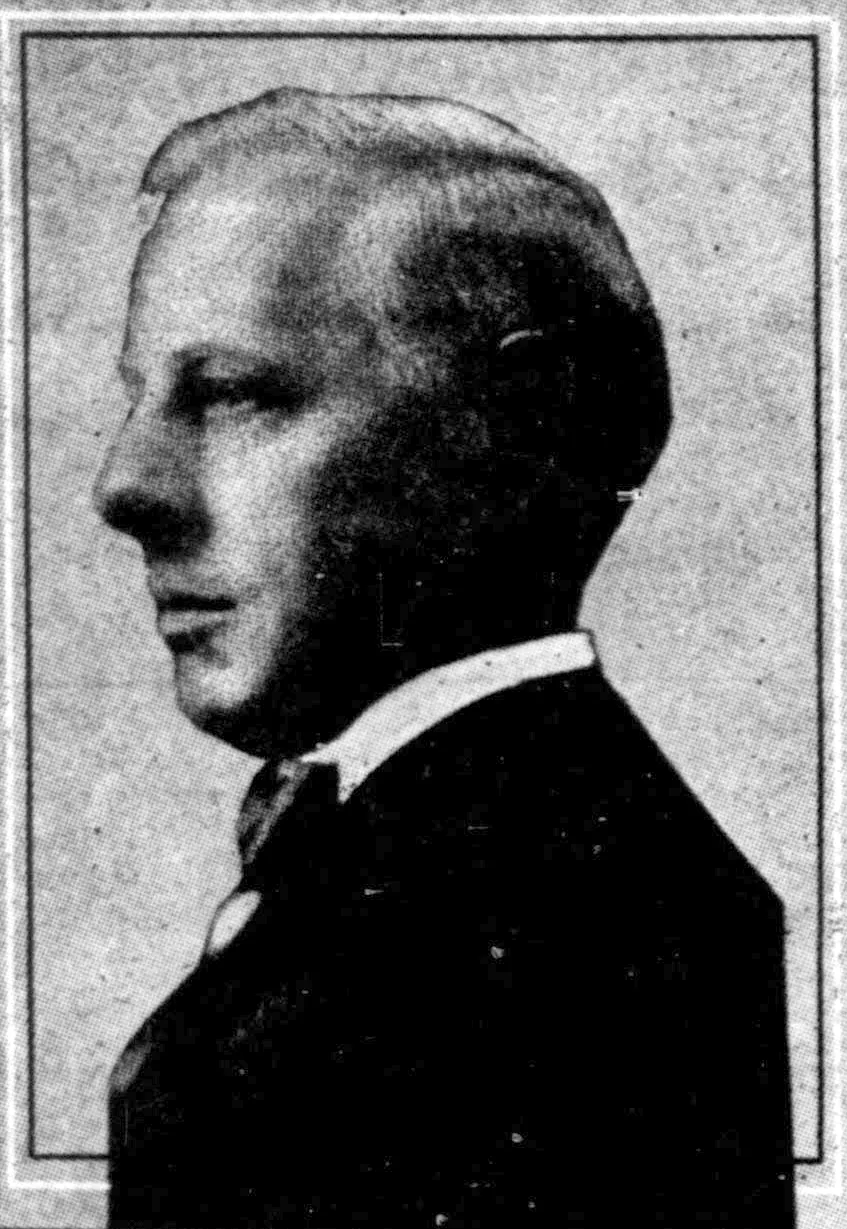
On the evening of Tuesday, 29 October 1929, Jesse Livermore came home to Great Neck, in the suburbs of New York. The market had collapsed that day as America had never seen it collapse before, and the newspapers were full of men who had lost everything they owned between noon and mid-afternoon. His wife Dorothy met him at the door thinking he was one of them. He was the most famous speculator on Wall Street, and it stood to reason that he would be among the first to drown. His biographers say she braced for the worst, and that he told her calmly that this had been the greatest day of his life. He had lost nothing. He had sold the market short some weeks earlier, and made about a hundred million dollars in that crash, the equivalent of more than a billion dollars today. The newspapers gave him the name “the Great Bear.” People accused him of causing the disaster, and he ended up hiring guards for his house.
Only five years later, in March 1934, Livermore stood before a bankruptcy court and declared assets of eighty-four thousand dollars against debts of two and a half million. Six years after that, in November 1940, he took his own life in a Manhattan hotel. He left his third wife a note saying that he was tired of fighting, and that he was a failure.
Livermore was not ignorant of risk. He knew more about it than anyone else of his time, and he wrote a book on it. The man who understood risk perfectly in 1929 is the same man who mismanaged it afterwards. That is the first lesson in this subject: knowing risk is one thing, measuring it is a second, and managing it is a third art that the first two do not stand in for. In this essay we take the three in their order: what risk is, how it is measured, and how it is managed. Then we weigh what we have arrived at on the scale of revelation.
First: Defining Risk
The earliest record of the Latin word resicum comes in a sea-loan contract drawn up by a notary in Genoa in 1156, describing what the lender bears if the ship goes down. Some etymologists hold that the word passed into Latin from the Arabic rizq by way of Byzantine Greek, because the traders of the Mediterranean called whatever a voyage brought back rizq, whether it was good or bad. That derivation is disputed, though, and we do not build on it. What matters is that the word was born in sea trade, where the ship either comes back loaded or never comes back at all. That opposition between profit and drowning is still the heart of the idea today.
The first to draw a precise distinction between two different things we call risk was the American economist Frank Knight, in his book Risk, Uncertainty and Profit in 1921. For him, risk is what has known probabilities and can be calculated: the chance that one ship in a hundred goes down in a given season. Uncertainty is what has no known probabilities at all, because the event is unique or does not recur in any pattern. Will a war break out this year that closes the Strait of Hormuz? The distinction matters, because the measuring tools that follow work on the first and fail on the second. Most financial disasters happened because someone treated the second with the tools of the first.
Nassim Taleb adds a third distinction, the most important one in practice: the difference between a loss after which you return to the game, and a loss that puts you out of it for good. He calls the second an absorbing barrier, a term borrowed from physics, because whatever goes into it does not come out. The first kind of loss is weighed by cost and benefit. The second is not weighed at all, because multiplying it by any probability, however small, yields a ruin that no bounded gain repays. He sums the whole matter up in a single sentence: never cross a river because it is on average four feet deep. His famous example is a group playing Russian roulette once for a million dollars. Five out of six win, and the naive arithmetic says the expected return is excellent. But whoever keeps playing is certain to end in the graveyard.
Out of this we get a working definition. Risk is not the event itself. It is the extent of your exposure to the event multiplied by what the event does to you. War is one event, but it is a different risk for a man who owns land in the region than for a man who owns bonds in a distant country. A crash is one event, but it is a loss for the man who bought with his own money and ruin for the man who bought with somebody else's. So the first question in risk management is not “what might happen?” but “what happens to me if it does?”
Second: Measuring Risk
The simplest method of measurement is the one used in hospitals, factories and airlines: a table with two axes. One axis is the probability that the event occurs, the other the severity of its effect, and every risk is sorted into one of the table's cells. The risk that combines high probability with large impact is treated first, and the one that combines slight probability with mild impact is accepted. Simple as it is, this method solves most problems. Most people do not go wrong in calculating risk but in ignoring it, and the first step in ignoring it is not writing it down.
The second method is more exact and more dangerous: expected value, the sum of all possible outcomes, each one multiplied by its probability. This tool is mathematically correct and deceptive in practice, and the first to expose its deception was a physician. In 1738 Daniel Bernoulli published a paper in St Petersburg. In it he observed that a thousand dollars is not the same thing to a poor man and a rich one. A person weighs outcomes not by their value but by their utility, and the utility of each additional dollar falls as wealth rises. From here the idea of risk aversion was born. For the first time it was understood why a sensible man buys insurance even though its expected value is negative: he pays with money that is cheap to him in order to protect money that is dear.
The third method is volatility. In 1952 Harry Markowitz formulated the idea that the risk of an asset can be measured by how much its return fluctuates. That same idea says that the risk of a portfolio is not the sum of the risks of its assets but less than that, if the assets do not move together. This idea won him a Nobel prize forty years later, and it is the basis of every investment fund in the world today. Then in the nineties a more famous tool was built on it, called Value at Risk. It tells you: with 99% confidence, your portfolio will not lose more than such and such in a day.
Here measurement stumbled, and stumbled in full view. In 1994 a fund named Long-Term Capital Management was founded in Greenwich, Connecticut, and on its board sat Robert Merton and Myron Scholes, who would win the Nobel in economics in 1997. The fund worked with the most exact measurement models there were, and it used leverage that at some points reached twenty-five times its capital. It did so because the models said a large loss was a probability that occurs once in the life of the universe. In August 1998 Russia announced that it was suspending payment on its debts. The market moved in a direction the models had not expected, and within weeks the fund lost around four and a half billion dollars. The Federal Reserve had to gather the big Wall Street banks in one room to rescue it, so that the financial system would not fall with it. The trouble with the models was that they assumed losses are distributed along the familiar bell curve, where the tails are thin and catastrophes are all but impossible. Real markets are fat-tailed: what looks impossible may happen every few years.
What is left, then, of what can be measured? What is left is what does not depend on predicting tomorrow but on surviving in it. In 1956 John Kelly, a researcher at Bell Labs, published a paper solving a problem that looks like something out of games of chance. If you know the probability of winning a repeated bet, how much of your money do you put on each one? The answer, which came to be known as the Kelly criterion, is one specific fraction. Below it you grow more slowly than you are able to, and above it you accelerate toward ruin, however profitable the bet is on average. His example: a loaded coin gives you a win 60% of the time and a loss 40% of the time, and doubles your stake if you win. The average is clearly in your favour. Even so, if you bet all your money on every throw you will certainly be ruined by the first loss, and if you bet half of it you will be ruined in practice over time. The arithmetic says the optimal bet is twenty per cent of capital. The Kelly criterion does not measure risk. It measures something more useful: the limit that your fear should neither exceed nor fall short of.
It remains to say that the measuring instrument we were born with is broken. In 1979 Daniel Kahneman and Amos Tversky published prospect theory. In it they proved experimentally that a loss hurts a person about twice as much as an equal gain pleases him, and that people overrate small tangible probabilities and make light of rare catastrophic ones. The practical result is that we fear small daily losses more than we should, so we sell at the first decline. We also make light of the risks there is no coming back from, so we neither insure nor take precautions. Innate fear, then, is not a gauge to be followed. It is a meter in need of calibration.
The last thing to be said about measurement is that some things are not measured at all. In his book The Black Swan in 2007, Taleb described the event that has three properties. It is rare and the models do not expect it, its impact is enormous, and afterwards people come along with an explanation that makes it look as though it was to be expected. It was given this name because Europeans went on believing for centuries that all swans were white, until the black swan was discovered in Australia. His unforgettable example is the turkey. The butcher feeds it every day for a thousand days, and every day the turkey grows more certain that the butcher loves it, and its confidence is at its highest on the day before Thanksgiving. The lesson is that the absence of catastrophe in the past is no proof of its absence in the future, and that a short calm history is more dangerous than a long turbulent one, because it kills fear by degrees.
Third: Managing Risk
The management books teach that risk has four responses: avoid it, reduce it, transfer it to someone else, or accept it. The whole art lies in choosing the right response for the right risk.
Avoidance is the simplest of them, and it is used far less than it should be: do not go into what you do not understand. Most of the large losses I have seen among friends were in assets whose owner did not know how they make money or how they lose it. He bought because someone else had bought. Avoidance calls for no intelligence. It calls for the ability to say “I do not know,” which is rarer than intelligence.
Reduction is where Kelly and Markowitz both belong: position size and diversification. There is no clearer laboratory for this than the cryptocurrency market. On 10 October 2025, days after bitcoin set a record above 126,000 dollars, it fell within hours to below 105,000. The drop was about 17 percent, which is ordinary in the history of this asset. Even so, more than 19 billion dollars of leveraged positions were closed out by force within 24 hours, and more than 1.6 million accounts were hit. It was the largest liquidation event in the history of this market. About 85 percent of those positions were bets on a rise, and many of them carried twenty-times leverage or more. Look at two men who bought the same asset on the same day. The first bought with money he did not need, at a small share of his wealth, and borrowed nothing. He watched his balance fall 17 percent in a night. It hurt, he slept, and in the morning he still owned what he had bought. The second bought at twenty-times leverage, so a 5 percent fall was enough to wipe out his entire capital. The exchange sold his position automatically while he was asleep. Same asset, same volatility, same news. The whole difference was position size. Volatility was not the absorbing barrier. Leverage was what turned a loss he could have come back from into ruin with no way back.
Diversification is far older than Markowitz. In the same paper, Bernoulli wrote that it is advisable to divide goods exposed to risk into several portions rather than risk them all together. In other words, do not put all your goods on one ship. And the ship may be a custodian rather than a market. In 2014 Mt. Gox collapsed, the exchange that handled most of the world's bitcoin trading. In November 2022 FTX collapsed within days. In neither case did the depositors lose because the price fell. They lost because the party holding their assets disappeared. The risk came through a door nobody was watching, and that is the first mark of a black swan. The one who survived was not the one who predicted the collapse, since only a few did. He was the one who had not placed everything he owned with a single custodian.
Transfer is insurance. The arithmetic of insurance and of gambling is the same, and only the direction is reversed. In gambling you pay a small certain amount to gain a chance at a large profit. In insurance you pay a small certain amount to remove the chance of a large loss. Bernoulli explained why this is rational, and Taleb adds the decisive rule: if the risk is of the ruinous kind, do not ask the price of the insurance at all. What you pay is finite and what you avoid is infinite, and any probability multiplied by infinity is infinity. Taleb has opponents who hold that his precautionary principle, applied without limit, would paralyse every action. It is a fair objection, and we will come back to it.
Acceptance is the right response to most risks, on one condition: that it comes with a margin. Morgan Housel, in The Psychology of Money, calls it room for error: building your plans so that they still hold even if your estimates are badly wrong. An emergency fund covering several months of expenses is not there to earn a return. It is there so that you are never forced to sell your assets at the worst possible moment. Housel distinguishes two entirely different skills: getting wealthy and staying wealthy. The first needs boldness and optimism. The second needs a standing fear that what you built can vanish, and that part of every success was luck that will not repeat.
There remains the fifth response, which the management books do not list because it is not a response: fear that turns into nothing. Its clearest case is the man who keeps all his money in cash because he fears the market. He thinks himself safe while inflation eats at his balance every night without a sound. Inflation at 3 percent a year takes away half the purchasing power in about 23 years. The second is the man who sells in panic. For decades the American firm DALBAR has published an annual report comparing the individual investor's return with the market's, and the result repeats: the individual comes in clearly below the market. Not because his choices are bad, but because he leaves at the bottom and returns at the top. The third gathers information without end and never decides. All three paid the cost of fear in full, in worry, lost sleep and missed chances, and none of them received its one benefit, which is a better decision.
In the Clinic
The same three tools, definition, measurement and management, meet the physician every day in the practice of medicine. Take the patient with atrial fibrillation. He is exposed to a stroke, and anticoagulants clearly reduce that risk, but they raise the risk of bleeding. We define the two risks, then measure them with two validated scores, one for the risk of stroke and one for the risk of bleeding, and then we choose the response. In most cases the decision is clear. We accept a small daily cost, a bleed that can be stopped, to remove the chance of an irretrievable ruin, a stroke that takes half the body. The patient who fears the stroke and refuses the drug because he fears the bleeding as well is the man of the fifth response. He feared and did nothing, and so gathered the worry and the harm of delay together. The financial decision and the medical decision are brothers. In both you pay a limited cost to close the door on ruin.
The Scale of Revelation
Al-Tirmidhī reports from Abū Hurayra that the Prophet (peace be upon him) said: “Whoever fears sets out by night, and whoever sets out by night reaches the destination.” Setting out by night, idlāj in the language of the Arabs, is travelling in the first part of the night, and on another view in its last part. The image is taken from the life of a traveller in the desert. He fears that an enemy will fall upon him where he camps, or that highwaymen will catch him by day. So he does not wait for the morning. He crosses the night on the move, while he still has the ease of the cold and the stillness of the dark, and he reaches his lodging before the danger reaches him. The hadith is ḥasan (sound) and not ṣaḥīḥ (authentic). Al-Mubārakfūrī, in his commentary, judged one of its narrators weak, yet al-Tirmidhī and al-Albānī graded it ḥasan, and it is enough for us, because we are taking an image from it and not a ruling.
See how this short sentence gathers everything we needed from Knight, Bernoulli, Kelly and Taleb. Fear in the hadith is a definition of risk: the enemy is there even if he is not seen. Setting out by night is measurement and response at once. The traveller judged that the hardship of a sleepless night was lighter than destruction. Then, of the four responses, he chose to reduce rather than to avoid. He did not cancel the journey; he changed its timing. This is the answer to Taleb's opponents, who feared that precaution would paralyse every action. Then notice what the hadith does not say. It does not say, “Whoever fears is saved.” Between the fear and the arrival an action has been placed. Fear on its own brings nobody anywhere, and this is the fifth response we saw in the hoarded cash and the panic selling. The one who arrives is the one who turned his fear into a change of behaviour.
Fear itself has a limit on this scale. Ibn al-Qayyim, in Madārij al-Sālikīn, quotes his teacher Ibn Taymiyya as saying: “The limit of fear is what holds you back from disobeying God; whatever exceeds that is not needed.” The sentence was said in a religious context, but its logical structure is wider than its context. Fear has a single function, which is to change behaviour. Its measure is not its intensity but its effect. Whatever exceeds the amount that produces the effect is pure waste. This is exactly what Kelly said in numbers: one point, and every departure from it in either direction is a loss.
In the Qur'an there are two examples, and I will add nothing to them, while taking care not to say that the Qur'an anticipated Markowitz. That is not the purpose of revelation, nor is it good manners in reading. The first is Jacob's words to his sons: “My sons, do not enter by a single gate; enter by separate gates. I can avail you nothing against God” (Yūsuf 12:67). The verse has two halves. The first is a precaution that spreads the risk. The second is an acknowledgement of the limits of precaution. This is the division that took Knight a whole book to state: the means for what can be calculated, and entrusting the matter to God for what cannot, and neither one cancels the other. The second is Joseph's words: “You will sow for seven years without pause; whatever you harvest, leave it in the ear, except a little that you eat” (Yūsuf 12:47). This is the room for error that Housel named: a reserve built in the years of plenty for years whose coming nobody knows, though Joseph did know.
Tawakkul: After the Arithmetic
Al-Tirmidhī narrates from Anas that a man said: Messenger of God, shall I tie it and trust in God, or let it loose and trust in God? He said: "Tie it, and trust in God." The hadith is ḥasan (sound). On our subject here it is more exact than everything written about trust in God, tawakkul, because it answers the question people get wrong from two directions. One side thinks that trust dispenses with the tether. The other thinks that the tether dispenses with trust. Ibn al-Qayyim gathers both sides in one sentence worth memorising: "To turn toward the means is to associate partners with God in one's monotheism; to deny that the means are means is a defect in reason; and to turn away from the means altogether is an attack on the Law." Three errors, not two: to lean on the means as a man who sees nothing but them, or to deny that a means is a means, or to drop the means altogether.
So what is tawakkul? Ibn Rajab defines it as "the heart's sincere reliance on God in bringing about benefit and warding off harm." Notice the word: the heart. Trust in God is the work of the heart, the tether is the work of the hand, and each of them has its own place. The hand calculates, diversifies, insures and sizes the position, because that is its field. The heart entrusts to God what lies beyond the arithmetic, because that is its field. The whole error is in the two of them trading places: a heart that frets over what the hand should have been calculating, and a hand that tries to calculate what cannot be calculated.
This is where tawakkul adds something to the theory of risk management, something found in neither Kelly nor Taleb. Ibn Taymiyya said that fear beyond the amount that changes behaviour is "not needed." But how does a person get rid of this surplus? The management books say nothing. They measure the risk and spread it, then leave you carrying the rest of the fear alone. Trust in God is what absorbs that remainder. The man who has tied his camel and calculated what can be calculated is still left with what cannot be calculated. Will a war break out? Will the platform collapse? Will a black swan appear through a door nobody was looking at? This is Knight's uncertainty exactly, and it has no formula. The man who does not trust in God carries it as a chronic anxiety that spoils his next decision. The man who does trust puts it where it belongs. Trust in God here is not an anaesthetic. It is the correct order: it begins where the arithmetic ends, not before it. Whoever fled the plague with a calculation behind him was trusting in God; whoever stayed in it without one was the passive one who calls his passivity trust. The distance between the two words is the distance between the tether and letting it go.
And in the hadith of the birds, which al-Tirmidhī narrated and graded ṣaḥīḥ (authentic): "If you relied on God as He deserves to be relied on, He would provide for you as He provides for the birds: they go out in the morning hungry and return in the evening full." The point is that the birds go out. They leave their nests and search, and they do not wait for provision to reach them in the nest. The hadith cited as evidence for trust in God is itself the clearest evidence for taking up the means. This is the scale of revelation in this whole matter: tie it, then trust in God.
Rules for the Road
I close with practical rules for measuring risk and treating it in the affairs of life, not in money alone. What has gone before serves health, work and family as well as it serves a portfolio:
- Write the risk down. What is not written is forgotten, and most people do not go wrong in calculating risk so much as in ignoring it. A table of two columns, probability and impact, is enough for most of life's decisions.
- Do not ask "how likely is it to happen?" Ask "what happens to me if it does?" Risk is your exposure to the event, not the event itself. A road accident has the same probability for everyone, and a different impact for the man who wore his seatbelt and the man who did not.
- Classify the risk first: is it a loss or a ruin? A loss is managed by cost and benefit. Ruin is not managed at all; it is prevented at any price. Smoking, driving without a seatbelt, guaranteeing a loan you cannot repay, and leverage all belong to the second class, and averages are no use with any of them.
- Do not cross the river by its average depth. Ask about its deepest point, not its average. What is the worst year this job, or this investment, or this partner could go through? And would I still be standing after it?
- Size the decision, not the probability. You cannot change the probability that the market collapses. You can change how much of your money is in it. In every decision where you do not control whether the event happens, ask what you do control. Usually it is the size.
- Do not put your goods in one ship. One source of income, one skill, one friend, one doctor, one custodian for your assets: each of these is a ship, and if it sinks everything sinks with it. Diversification is not for portfolios only.
- Buy time in advance. An emergency fund, insurance, a routine check-up, a night's sleep before the big decision: all of these are setting out by night, a small cost paid in comfort to avoid a large cost in hardship.
- Calibrate your gauge. The gauge you were born with fears the plane and not the car, and fears a share falling for a week but not twenty years without insurance. Whenever you feel a sharp fear, ask whether this is a risk of loss or a risk of ruin. And whenever you feel a long calm, ask whether these are the thousand quiet days.
- Put an act and a deadline between the fear and the decision. Fear that does not turn into a decision within a set time is not caution but anxiety, and you pay for it and receive nothing back. Give your hesitation a date at which it ends.
- Slow down at the doors that do not open twice. Decisions you can go back on, take quickly and learn from. The ones with no way back, such as marriage, selling the house, leaving a job and surgery, give them the time and the counsel that a single door deserves.
- Beware of what comes after success. The most dangerous moment in a traveller's life is the one in which he reaches the destination and thinks the road is over. Every Livermore fell after his greatest days, not before them. The skill of staying is not the skill of arriving.
- Tie it, then trust in God. Calculate with your hand what can be calculated, entrust to God with your heart what cannot, and do not let the two trade places.
Back to Great Neck
On that Tuesday evening in 1929, Jesse Livermore knew risk, measured it and managed it. He was afraid of the market weeks before other people were, and he turned his fear into a decision rather than into a sleepless night. He set out by night, and he reached the destination. Then came what the hadith does not talk about, because the hadith says nothing about a traveller who reaches the destination and then walks out of it in daylight. He spent on mansions and yachts, raised his bets, broke the rules he had written himself, and forgot that the skill of staying wealthy is not the skill of getting wealthy. He knew the limit of fear in the days when he was poor and building. He lost it when he was rich and holding on.
The art of risk management, then, is not the art of prediction, for nobody predicts. Nor is it the art of courage, since a brave man without a tether is a gambler. It is the art of knowing which door ruin will come to you through, of measuring what can be measured and admitting what cannot, and of putting an act between your fear and your decision. Anything beyond that is anxiety you pay for and receive nothing back for. Anything short of it is a daylight road you walk alone.
Further Reading
- Frank H. Knight, Risk, Uncertainty and Profit (1921). — econlib.org (full text, public domain)
- Daniel Bernoulli, Specimen theoriae novae de mensura sortis (1738), English translation in Econometrica 1954. — archive.org (scan of the Latin original, pp. 175–192) · English translation: jstor.org (free account needed)
- Harry Markowitz, Portfolio Selection, Journal of Finance (1952). — wiley.com (publisher's page; the abstract is free and the full text is paid)
- John L. Kelly, A New Interpretation of Information Rate, Bell System Technical Journal (1956). — princeton.edu (full text, PDF)
- Daniel Kahneman & Amos Tversky, Prospect Theory: An Analysis of Decision under Risk, Econometrica (1979). — mit.edu (full text, PDF)
- Nassim Nicholas Taleb, The Black Swan (2007) and Skin in the Game (2018), the chapter titled The Logic of Risk Taking. — archive.org (The Black Swan: scan, borrowable) · medium.com/incerto (the chapter in full on the author's page)
- Taleb, Read, Douady, Norman & Bar-Yam, The Precautionary Principle (2014). — arxiv.org (full text)
- Roger Lowenstein, When Genius Failed: The Rise and Fall of Long-Term Capital Management (2000). — archive.org (scan, borrowable)
- Morgan Housel, The Psychology of Money (2020), the two chapters: Getting Wealthy vs. Staying Wealthy and Room for Error. — harriman-house.com (publisher's page; no free copy)
- Tom Rubython, Jesse Livermore: Boy Plunger (2014). — No free copy; print only.
- Sunan al-Tirmidhī, hadiths 2450, 2517 and 2344, with al-Mubārakfūrī's commentary in Tuḥfat al-Aḥwadhī. — shamela.ws (Sunan al-Tirmidhī, full text) · shamela.ws (Tuḥfat al-Aḥwadhī, full text)
- Ibn Rajab al-Ḥanbalī, Jāmiʿ al-ʿUlūm wa-l-Ḥikam, the commentary on the forty-ninth hadith. — shamela.ws (full text)
- Ibn al-Qayyim, Madārij al-Sālikīn, the stations of fear and trust in God. — shamela.ws (full text)
- Liquidation figures for 10 October 2025 from the CoinGlass platform, as reported by CNBC and CoinDesk. — cnbc.com · coindesk.com
This is a translation of an essay written in Arabic. Quotations from the Qurʾān are rendered for sense; the Arabic page carries them in the original.
NEUTRAL FACT CHECKER
The factual claims in this essay were checked independently — its dates, figures, quoted texts, hadith gradings and the studies it cites. The result is published as it came out, and the essay was not edited to agree with it. The fact-check is written in Arabic: read the neutral fact-check →
© 2026 Husain Alkhaldy — published in the site's essays.