An Office in Princeton
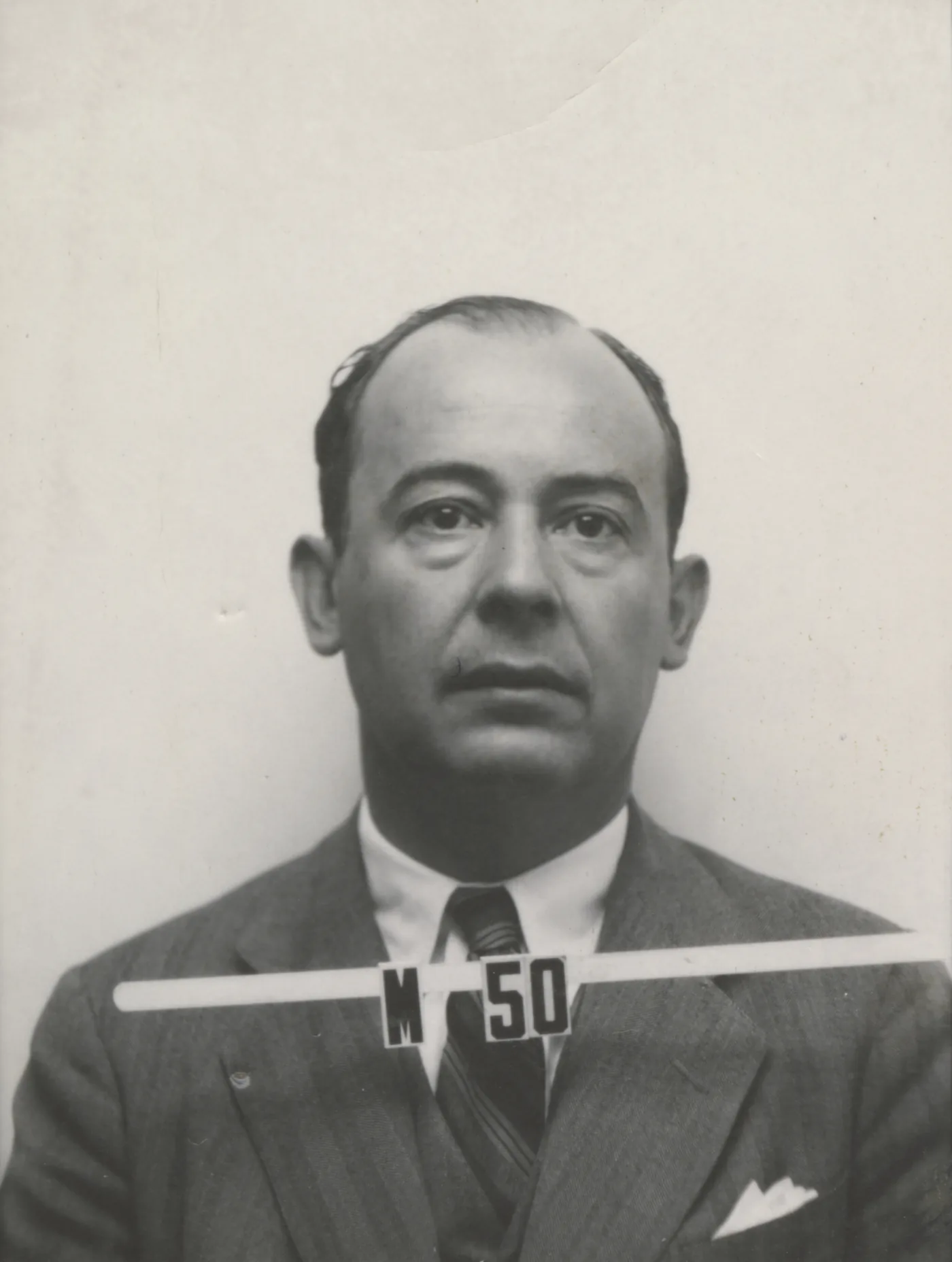
In the autumn of 1949, a student of twenty-one walked into his professor’s office at Princeton University. The student was John Nash. The professor was John von Neumann, the most famous mathematician of the day, and the man who five years earlier had written a book that founded a new science called game theory.
Put very simply, game theory is the study of decisions whose outcome depends on the decisions of other people. When you buy bread at the grocery store, what the customer next to you does makes no difference to you. But when you play chess, or negotiate your salary, or choose a route through heavy traffic, what you end up with depends on what the other party chooses. That is a “game” in the scientific sense of the word, and it has nothing to do with amusement. Wherever the word play appears in the rest of this article, it means dealing and communicating with another person or with other people, whatever the kind and the purpose of that dealing may be.
Nash had come to put forward an idea that looks simple. In any game of this kind, however many players there are, there is always a state in which each player has chosen the best move available to him, given what the others have chosen. In that state nobody finds a reason to change his decision, as long as the others have not changed theirs. Things simply settle there. Von Neumann did not let him finish. He cut him off and said: “This is trivial. Just a fixed point theorem.”
Nash himself told this story decades later to the writer Sylvia Nasar, and she published it in her book A Beautiful Mind. What happened afterwards is on the record. Nash wrote his doctoral thesis in twenty-seven pages and no more, and submitted it in May 1950. Forty-four years later, in 1994, those pages won him the Nobel Prize in Economics.
The idea von Neumann called trivial is now one of the most important tools in modern economics. From there it moved into biology, into politics, into the design of internet networks, into our homes and our relationships, and into our daily struggle with ourselves. Before any of that, though, a common error has to be corrected, because most of what is said about Nash in popular writing has been turned upside down.
What Nash Actually Proved
Most people know Nash from the film that took the same title as the book, A Beautiful Mind, released in 2001. In the film’s most famous scene, Nash is sitting with his fellow students in a café when a beautiful young woman walks in with her friends. Nash thinks it through: if we all compete for her, each of us will get in the way of the others and every one of us will lose. He then announces that the famous economist Adam Smith was wrong, and that the best results are reached when each individual works for his own interest and for the interest of the group at the same time.
It is a fine scene, but it is not accurate. Nash never said this, and he never touched on Adam Smith at all. What Nash proved is much narrower than that. He proved that every game contains at least one point of equilibrium. He never once said that this point of equilibrium is a good one.
Many people assume that “equilibrium” means “the best solution”. In truth, Nash equilibrium tells you where things settle when every party pursues its own interest. It does not tell you where they ought to settle. The difference between the two is enormous, as the following story will show.
| The second confesses | The second stays silent | |
|---|---|---|
| The first confesses | Five years for each of them ← this is where the game settles | The first: free The second: ten years |
| The first stays silent | The first: ten years The second: free | One year for each of them ← the best outcome for them together |
In January 1950, a few months after Nash met von Neumann, two mathematicians at the RAND Corporation in California tested his idea with a small game. They were Merrill Flood and Melvin Dresher. Then came Albert Tucker, Nash’s professor at Princeton, who dressed the game in a story that went on to become the most famous in the whole field: the prisoner’s dilemma.
The story runs as follows. The police arrest two partners in a crime, put each of them in a separate room, and then make each of them the same offer:
- If you confess and your partner stays silent, you walk out free and he is jailed for ten years.
- If you stay silent and he confesses, you are jailed for ten years and he walks out free.
- If you both stay silent, you are jailed for one year only, on a lesser charge.
- If you both confess, you are jailed for five years.
Each prisoner sits alone and thinks it over. If my partner stays silent, my best move is to confess, so that I walk out free. And if my partner confesses, my best move is to confess as well, so that I take five years instead of ten. Confessing is therefore better for me in either case. The other partner arrives at exactly the same conclusion. So they both confess, and each of them serves five years, even though staying silent together would have got them out after a single year.
This is Nash equilibrium in its clearest form. Each party chose what was best for himself, and neither of them made a mistake in the calculation. Even so, they ended up at the worst result for the two of them together. It was the correct calculation that took them to the bottom.
This is where the word “engineering” in the title of this article comes from. If a game settles at a bad result, there is no point in blaming the players. The solution is to change the game itself. You change the gains and the losses so that cooperation becomes the option everyone settles on. That is what I will try to explain in the rest of the article: first in our relationships, and then in a person’s relationship with himself.
The Dilemma in the Clinic and at Home
I see the prisoner’s dilemma in my clinic every week, even if nobody there calls it by that name. A patient comes in who has already been seen by another doctor, one who neglected him, or rushed his treatment, or simply failed to convince him. He sits in front of me on his guard. He holds back some of the information and tests me on the rest. On the other side, that doctor has learned from earlier complaints that the safest course is to order every test he can, so that nothing can be blamed on him.
The result? The doctor orders tests the patient does not need, in order to protect himself. The patient holds back information the doctor needs, in order to protect himself. The two of them come out worse than they went in: higher cost, slower diagnosis, less trust. Neither of them made a mistake in the calculation, and that is precisely what makes the trap so hard to get out of. The answer is not a more accurate calculation. It is a change in the premises the calculation rests on.
At home there is a game older than this one. Take a married couple after a quarrel. Each of them knows that a single word of apology would end the matter, and each of them waits for the other to start, because whoever starts is, in his own eyes, admitting that he was the one at fault. The silence stretches on for days, while both of them want the same thing.
What is holding the two parties here? Not ill will, but a shortage of information. Neither of them knows what is going on inside the other, so each fills the empty space with the worst reading available. I wrote in an article called “They Will Not Cease to Differ” about the way we read other people through ready-made templates, so I will not repeat that here. What matters now is that science calls the solution “narrowing the information gap”, while homes call it something simpler: whoever speaks first.
How Cooperation Wins: Axelrod's Tournament

In 1980, the American political scientist Robert Axelrod had an idea. He sent out an invitation to researchers in game theory: write a computer program that plays the prisoner's dilemma. Every program would play every other program for two hundred consecutive rounds, and we would see which one collected the most points.
Fourteen programs reached him. Some were elaborate, running to pages of code. But the winner was the shortest of them all: just four lines, written by the psychologist Anatol Rapoport. The program was called Tit for Tat, and its rule is simple. Cooperate in the first round, and in every round after that, do what your opponent did in the round before. If he cooperates with you, you cooperate with him; if he cheats you, you cheat him once; and if he goes back to cooperating, you go back with him too.
Axelrod published the results, then ran the tournament again. This time sixty-two programs arrived from six countries, and every entrant knew the previous winner and was trying to beat it. The four lines won again.
In his 1984 book The Evolution of Cooperation, Axelrod drew out of these tournaments four traits shared by the successful programs. Translate them into the language of relationships and they become rules for dealing with people:
- Be nice: start by cooperating, and never be the first to cheat.
- Be retaliatory: if someone cheats you, answer at once, and do not let yourself be exploited.
- Be forgiving: if he returns to cooperating, return with him at once, and hold no grudge.
- Be clear: make sure the other side can work out your rule within a round or two.
Axelrod noticed something surprising. Tit for Tat never beat a single opponent head to head. In every match it either drew or lost by a narrow margin, and yet it won on the total. How? Because it let every opponent do well against it, and so it did well against everyone. The programs that beat their opponents impoverished them, and impoverished themselves along with them.
But the story has an important sequel. In 1992, the researchers Martin Nowak and Karl Sigmund published a study in Nature that exposed a weakness in Tit for Tat. Imagine a game with room for error in it. One side means to cooperate, but the other reads it as cheating. The second answers by cheating, the first cheats back, and the two fall into an endless spiral of revenge, each convinced that he is the victim. In that world, a more forgiving version of the program won. It deliberately overlooks some acts of cheating, and the two researchers called it Generous Tit for Tat.
This is closer to our lives than the first tournament was. What destroys relationships most is not outright cheating. It is a message read the wrong way, or a tone taken to mean something it never meant. A little forgiveness is not weakness. It is a safety valve against misunderstanding.
Now to the lesson that concerns the engineering. Cooperation did not win these tournaments because the programs were kind. It won because the game was repeated. Had the prisoner's dilemma been played only once, cheating would have been the mathematically correct answer. What changed the outcome is what Axelrod called the shadow of the future: each side knows it will meet the other tomorrow, and the day after that.
This is the first practical tool we have. We treat a neighbour we will see for twenty years differently from a driver on a motorway we will never see again. That is not hypocrisy, but a natural response to a different game. Anyone who wants a cooperative relationship has to lengthen its life first, and to let the other side know that it is long.
The Game Against Yourself
It does not stop at relationships. In 1978, the economist Thomas Schelling, who would later win the Nobel, published an article with a strange title: the Art of Self-Management. His idea is that a single person is not one player but two. There is a present self that wants comfort now, and a future self that wants health, learning and money years from now. The two are fighting over the same body. The trouble is that the negotiation between them is unfair, because the present self is always the one holding the wheel. The future self is absent. It has no voice at the moment the decision is made.
The following year, the Norwegian philosopher Jon Elster brought out a book called Ulysses and the Sirens. The story comes from the Greek epics. The hero Ulysses wanted to hear the sirens' bewitching song, and he knew that everyone who had heard it threw himself into the sea. So he ordered his sailors to tie him to the mast, to stop their own ears with wax, and to pull his bonds tighter every time he begged them to untie him. Ulysses knew that his future self would not defeat his present self in the moment of the song. So he bound the present self before the moment came.
Economists call this pre-commitment. The Arabs had named it before them in a single word: the ʿiqāl (the hobble a camel is tethered with). You hobble your she-camel before she bolts, not after.
Experiments confirm that the present weighs more in our minds than its true weight. A reward today looks larger than a reward next year, even when it is in fact smaller. In an experiment published in 2011, the researcher Hal Hershfield and his team took photographs of young people's faces and processed them by computer to look forty years older, then showed them the result. Those who saw their own face as an old face chose to save more for retirement than those who saw it unchanged. Why? Because the future self had become a real person with a face, and so it entered the negotiation as a party to it.
I know this game well from the clinic. A patient with thalassemia needs a drug that clears the excess iron out of his body. The price now is an infusion by subcutaneous pump for hours every night, or daily tablets without a break, and no immediate benefit he can feel. The gain twenty years from now is a heart the iron has not damaged, and a healthy liver. The doctor loses this negotiation every time he settles for preaching. He wins it every time he makes the future present: he shows the patient the iron figure in his blood coming down, he shows him a picture of his heart, and he introduces him to an older patient who stayed with the treatment and stayed well. In this game the doctor acts on behalf of the patient's future self, and the most important thing he does is give it a voice.
This is how we come to understand habits, all of them. A harmful habit gives you its reward now and defers its price. A useful habit takes its price now and defers its reward. No wonder the future self loses every time. The answer is not a stronger will, because the will is the player that always loses. The answer is to change the gains and the losses before the round begins:
- Raise the price of the harmful habit now: put the phone in another room, cancel the subscription, and do not buy the sweets in the first place.
- Lower the price of the useful habit now: leave the book open on the table, put your walking shoes by the door, and make the first step so small that there is nothing to resist.
There is no self-deception in this. It is honesty with the self: the self is two players, and the winner is whoever arranges the game before it starts.
Games That Never End
One last distinction changes the meaning of everything above. In 1986, James Carse, a professor of religion at New York University, published a short book called Finite and Infinite Games. A finite game has fixed rules, a set time, and a winner announced at the end: a match, an election, a deal. An infinite game has no winner, because its purpose is that play should continue: health, learning, marriage, friendship, raising children.
Most of our misery comes from playing the infinite games with the mindset of a finite game. The man who wants to win the argument with his wife loses the marriage. The man who wants to defeat his colleague in the meeting loses the team he will work with for ten years. In Axelrod's language: the shadow of the future in an infinite game never ends, so cheating that wins a single round means nothing there.
This completes what I mean by the word "balance." A Nash equilibrium in real life is neither surrender nor rigidity. It is the point where protecting your own boundaries (Axelrod's second rule) meets widening the space for cooperation (the other three rules). Whoever understands this sees that his own success is not complete until he builds an environment around him in which others succeed too. That is not only generosity on his part. It is the only equilibrium that holds up in a long game.
The Scale of Revelation

When I set Axelrod's results beside the Qur'an, I find a resemblance in form that should not be hidden, and a difference in foundation that should not be ignored.
God says in Sūrat al-Shūrā: ﴿and those who defend themselves when they are wronged * The payment for a bad deed is one like it. But whoever forgives and mends what is broken, his reward is with God. He does not love those who do wrong﴾ [al-Shūrā: 39–40]. The two verses set out three ordered degrees. First, your right to answer the one who wronged you. Second, the limit on that answer: like for like, and no more. Third, pardon raised above them both. Then Sūrat Fuṣṣilat offers something higher than any answer at all: ﴿Push back with what is better, and the man who was your enemy becomes like a close friend﴾ [Fuṣṣilat: 34].
The more accurate thing to say, I think, is that the difference matters more than the resemblance. Forgiveness in Axelrod is a calculated bet: I forgive you today because I will play you again tomorrow. If there is no tomorrow, forgiveness falls away, and the theory says so plainly. Forgiveness in the Qur'an hangs on a single phrase instead: ﴿his reward is with God﴾. The calculation here includes a party who never leaves the game and never misses a round. So the believer can forgive someone he will never meet again, and cooperate with a stranger on a road he will not travel twice. Not because he has miscalculated, but because his calculation is wider than Axelrod's matrix. For the believer the shadow of the future never ends, so every game he plays is infinite, in Carse's sense and beyond it.
As for the game between the present self and the future self, look closely and it is the subject of the whole Qur'an: ﴿No: you love the fleeting * and you let the hereafter go﴾ [al-Qiyāma: 20–21], and ﴿Rather, you prefer the life of this world * while the hereafter is better and lasts longer﴾ [al-Aʿlā: 16–17]. The Qur'an calls the present self "the fleeting", a name more precise than anything Schelling produced. Hershfield's remedy is to see your future self with your own eyes, and the Qur'an uses it on the widest possible scale. It shows the reader himself on the Day of Resurrection, in scenes beyond counting, until he almost sees his own face there. Even so, I stop at the same line. The resemblance is in the function, and the difference is in the referent. Hershfield shows you your face forty years from now; the Qur'an shows you your face after death. The second is not an extension of the first, but something else entirely.
Back to the Office
Von Neumann was right in his first sentence and wrong in his second. Yes, Nash's theorem is a fixed point theorem. All it says is that matters settle at some point, once each party is left to his own calculation. But fixed points are not trivial, because we live inside them.
A household settles at a silence nobody wants, each side waiting for the other. A clinic settles at tests nobody needs. A body settles at a habit we pay for twenty years later. What Nash wanted, and what those who came after him completed, was to know where matters settle, so that we know what to change in the game before it settles.
The theory may well be "just a fixed point". But the difference between one fixed point and another is the difference between a relationship that lasts and one that collapses. It is the difference between a person who builds himself and one who drains himself. That is what remains of the twenty-seven pages. Not that cooperation is a fine thing, since people knew that for centuries before Nash, but that cooperation can be engineered, until it becomes the point where matters settle of their own accord.
Further Reading
- Nash, J. F. (1950). Non-Cooperative Games. PhD dissertation, Princeton University. (Published in Annals of Mathematics, 54(2), 1951.) — rbsc.princeton.edu (full text, twenty-seven pages)
- Nasar, S. (1998). A Beautiful Mind. Simon & Schuster. — archive.org (scan, borrowable)
- Poundstone, W. (1992). Prisoner's Dilemma: John von Neumann, Game Theory, and the Puzzle of the Bomb. Doubleday. — archive.org (scan, borrowable)
- Axelrod, R. (1984). The Evolution of Cooperation. Basic Books. — archive.org (scan, borrowable)
- Nowak, M. A., & Sigmund, K. (1992). Tit for tat in heterogeneous populations. Nature, 355, 250–253. — doi.org/10.1038/355250a0 (abstract free, full text by subscription)
- Schelling, T. C. (1978). Egonomics, or the Art of Self-Management. American Economic Review, 68(2), 290–294. — jstor.org/stable/1816707 (by subscription)
- Elster, J. (1979). Ulysses and the Sirens: Studies in Rationality and Irrationality. Cambridge University Press. — archive.org (scan, borrowable)
- Hershfield, H. E., et al. (2011). Increasing saving behavior through age-progressed renderings of the future self. Journal of Marketing Research, 48(SPL), S23–S37. — pmc.ncbi.nlm.nih.gov (full text, free)
- Carse, J. P. (1986). Finite and Infinite Games. Free Press. — archive.org (scan, borrowable)
This is a translation of an essay written in Arabic. Quotations from the Qurʾān are rendered for sense; the Arabic page carries them in the original.
NEUTRAL FACT CHECKER
The factual claims in this essay were checked independently: the dates, the names, and the studies it cites. The result is published as it came out, and the essay was not edited to agree with it. The fact-check is written in Arabic: read the neutral fact-check →
© 2026 Husain Alkhaldy — published in the site's essays.