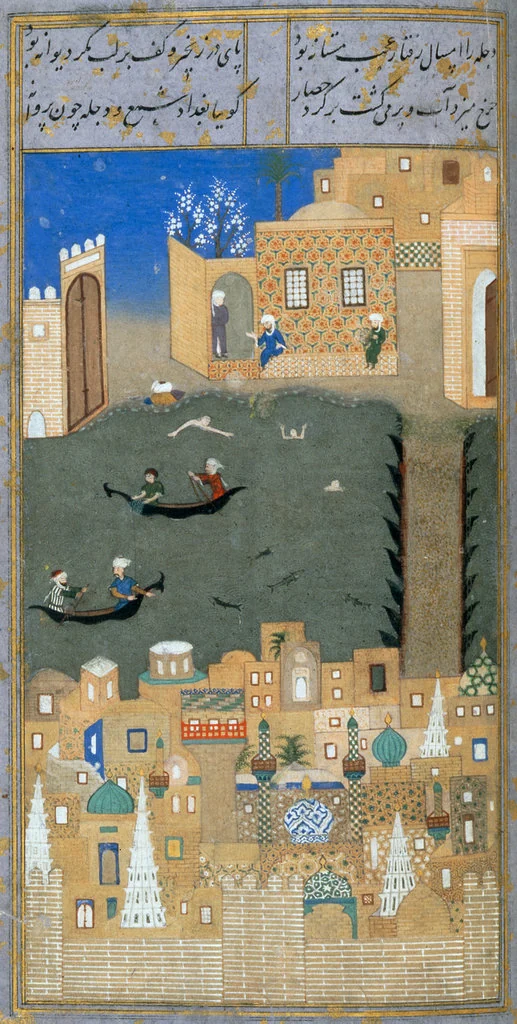
In Baghdad, in 459 AH, a crowd gathered at the gate of a new building overlooking the Tigris. The city had never seen anything like it. It was a madrasa built by the Seljuk vizier Niẓām al-Mulk. He endowed it with estates and property, built a market at its gate, and set allowances running for its teachers and its students. The crowd was waiting for the leading Shāfiʿī scholar of the age, Abū Isḥāq al-Shīrāzī, to take the teaching chair. The founder had named him to it himself, at the head of his own school.
The wait dragged on. The shaykh did not come.
Abū Isḥāq stayed away on opening day. The crowd was thrown into confusion. Then they brought in the jurist of Iraq, Abū Naṣr ibn al-Ṣabbāgh, the author of al-Shāmil, and installed him in the chair instead. Ibn al-Ṣabbāgh taught for twenty days. Then Abū Isḥāq's own circle lost patience with their shaykh's absence and sent him word: if you will not teach at the Niẓāmiyya, we will attach ourselves to Ibn al-Ṣabbāgh and leave you. The shaykh answered them, and he taught. But al-Dhahabī closes the story in Siyar aʿlām al-nubalāʾ with one sentence that sums up the whole man: "Shaykh Abū Isḥāq taught there after holding out, and he never took a jāmakiyya at all." The jāmakiyya, a Persian word taken into Arabic, is the salary.
The shaykh accepted the pulpit and refused the salary. The story of this essay lives in that narrow gap between the pulpit and the salary: the story of the day knowledge became a job.
What was born that day?
The Niẓāmiyya was not the first madrasa in Islam. Schools in Bukhārā and Nīsābūr had come before it, from the fourth century AH onward. But it was the first educational system in the sense we know today. There was a network of schools that Niẓām al-Mulk spread across Baghdad, Nīsābūr, Iṣfahān, Basra, Marw, Herat, Balkh, Mosul and Ṭabaristān, as Tāj al-Dīn al-Subkī counted them. There was an endowment (waqf) to pay for it, a salaried teacher drawing a fixed share of that endowment, and a student drawing a jirāya, a bread allowance of four raṭls a day, as Ibn al-Jawzī records it. There was a set curriculum tied to a single school of law, and a path after graduation into teaching, judgeships and public office. It is reported that Niẓām al-Mulk's spending on his schools reached six hundred thousand dinars a year, until informers denounced him to Sultan Malikshāh. The report shows the scale of the project, even if the numbers may be exaggerated.
Niẓām al-Mulk did not build his schools out of simple charity. The statesman was fighting an intellectual war against the Fatimid Ismāʿīlī daʿwa, which had founded al-Azhar and the houses of its mission. He wanted an army of full-time jurists to guard the state's school of law and its creed. Education here is politics. The madrasa is an instrument of state, and the full-time jurist is a soldier of knowledge. That is why the salary was a requirement of the design and not a footnote to it: a man who gives all his time to this has to live on something.
So a new creature was born that day: education as an institution, as a salaried post, and as a career. What we live with in universities now is a direct descendant of that day on the bank of the Tigris, from the salaries of professors to the allowances of students to the degree that opens the door to work.
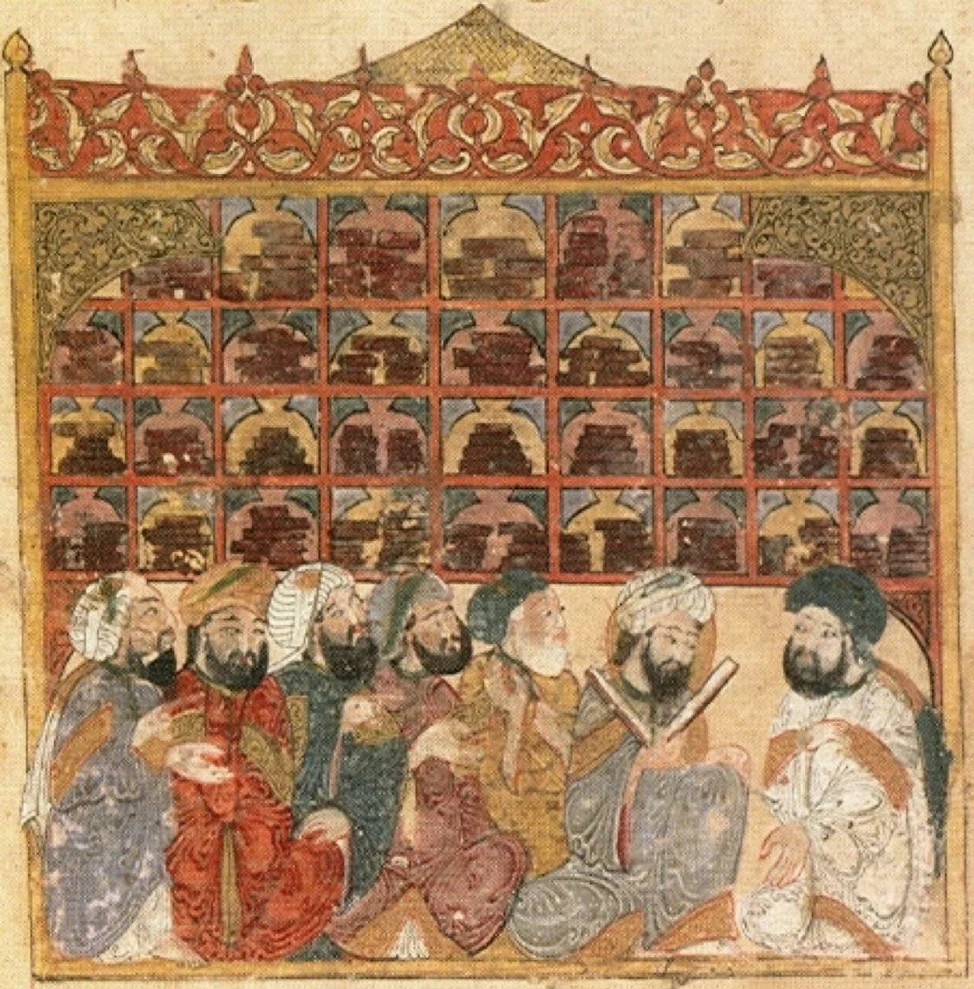
A wake for knowledge
The event did not pass quietly. It is reported that when news of the building of the Niẓāmiyya reached the jurists of Transoxiana, they held "a wake for knowledge", a mourning assembly for knowledge itself. What they said came to this. Knowledge used to be sought by men of high resolve and noble soul, who came to it for its honour, so that it was honoured through them. Once there is a wage on it, the base and the idle press in, and it ends in being cheapened.
A pause on the source
Modern writing on the history of education repeats the report of the "wake for knowledge", and attributes it there to Muʿīd al-niʿam wa-mubīd al-niqam of Tāj al-Dīn al-Subkī. I looked for it in Muʿīd al-niʿam and found no mention of a wake there, nor of Transoxiana. Nor have I found its earliest wording documented with a chain of transmission in the biographical works. It stands here where its like stands elsewhere in this series: a widely circulated report that expresses an attitude which really did exist in that age, not an established text to build on by itself.
The same goes for what is related about why Abū Isḥāq stayed away on opening day, that he had scruples about a suspicion of usurped property in the site of the school or in its rubble. That account is well known in the biographical works, and its wording varies. What is firm in the core of the story is that he stayed away, then taught after holding out, and that he never took the stipend.
Whether or not the wording of the wake is sound, the argument of the men who made it deserves to be heard at its strongest. It is an argument about selection. A system that does not pay draws only those who love knowledge for its own sake, so the filtering happens at the door. A system that pays opens the door to anyone who loves the wage and not the knowledge, and it is then asked to filter hearts instead, which is the harder of the two. These jurists were not arguing about what income is lawful and what is not. They had read a law of human nature: change the incentive and you change who comes.
In fairness to the madrasa
But fairness requires that we place on the other side of the scale what the madrasa itself put there.
The four raṭls of bread that drew such scorn are the same four that opened the door of learning to men who had no bread at all. Before the jirāya, giving your whole time to knowledge was a luxury. Only a man of means could afford it, or a man who bore a grinding poverty that pulled him away from study more than it carried him toward it. Al-Ghazālī himself is the case in point. His father died when he was a boy, and the household had little. He trained at the Niẓāmiyya of Nishapur under Imām al-Ḥaramayn al-Juwaynī, and in 484 AH he sat down to teach at the Niẓāmiyya of Baghdad. Without the funded school the community would have lost Abū Ḥāmid, and hundreds like him. (His time in Baghdad and his departure from the city in 488 AH are a story we told in full in the series on the meaning of life, and will not repeat here.)
And the "golden age" that the mourners measured against was never as pure as the picture suggests. Before the Niẓāmiyya there were judgeships to be sought, gifts to be accepted, and closeness to sultans to be competed over. The madrasa did not invent the entry of worldly gain into learning. It organised that entry and turned it into a published schedule with fixed salaries. An open salary may well be safer than a concealed gift.
So the question is not madrasa or no madrasa. The question worth a lifetime is this: how do we take the strength of the institution and survive what is fatal in it?
From the stipend to the diploma
The model of the funded school spread across the earth: from the Niẓāmiyyas to the Mustanṣiriyya to the schools of Syria and Egypt. In those same centuries universities arose in Europe, and in the end they became the modern university we know: seats, examinations, degrees, and a career ladder.
But one thing changed along the way, and it was the essential thing. Yesterday's school told its student: this is a road to God and to the service of religion and of people, and it may open a livelihood for you as well. Today's university says, with almost no evasion: this is a road to a job, and if you find meaning in it too, that is a bonus nobody will ask you about. What was central became marginal, and what was marginal became central. That reversal is what we now call the shrinking of the philosophy of education down to careerism.
Listen to the question that sums up the philosophy of an entire age, the one question every teacher on earth has heard: "Is this going to be on the exam?" That question is the modern wake for knowledge. It is held in every classroom, with no wailing woman and no report handed down.
Some economists have gone further than this. Bryan Caplan claimed in The Case Against Education that most of the value of a university degree in the labour market is a signal about the qualities of the man who holds it: his intelligence, his discipline, his readiness to comply. It is not a measure of what he actually learned. That is why the graduate forgets most of what he studied, and why the forgetting costs him nothing on the job. There is overstatement in the claim, and many have contested it. But the share of it that is right is enough to wound anyone who has spent his life in classrooms.
I say this from inside the medical profession. I know the student who memorises for the exam and empties his chest of it the next day. I know that the difference between him and the classmate who is learning in order to heal does not show up on a transcript. It shows up in full, years later, at a patient's bedside. Our civilisation called its physicians al-ḥakīm, "the sage", because medicine was to it the fruit of wisdom rather than a licence to practise, as we set out in the essay "A view of the history of the sciences among the Arabs".
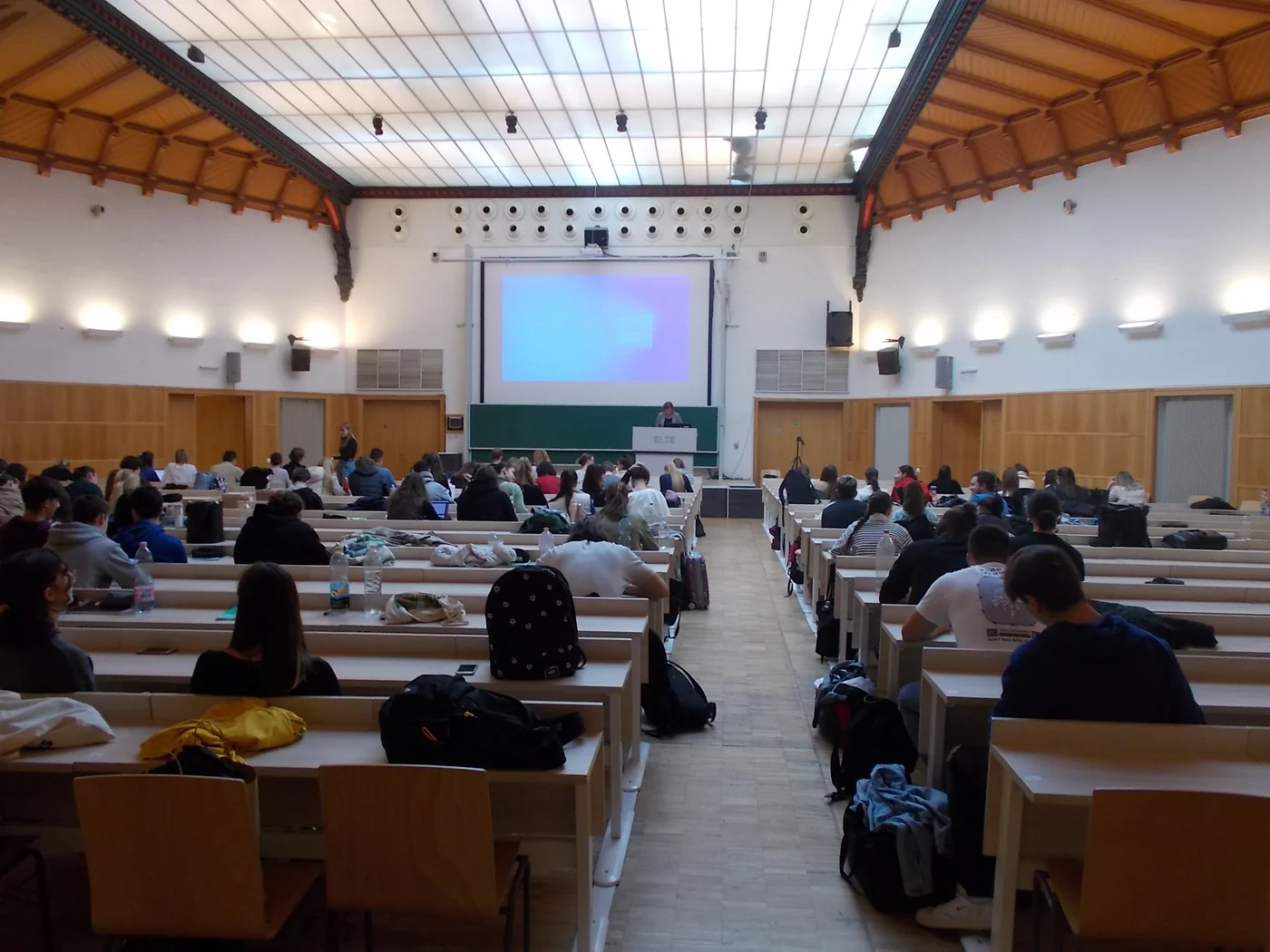
The missing immune system
The fault is not that the student wants a job. That is a natural and legitimate want. Revelation never disparaged it, and neither did sensible men. The jurists themselves permitted earning a living from teaching, so that knowledge would not die with the men who gave their whole time to it. Nor is the fault a modern one. The wake of 459 AH testifies that the illness of "knowledge for the sake of this world" is as old as the institution itself, and older.
The fault is this: the ancients had an immune system alongside the illness, and we inherited the illness and lost the system.
Their immune system was made of a whole set of working parts. The hadith "Actions are but by intentions" opened the books of knowledge. Manners were placed ahead of learning, and "we learned manners before we learned knowledge" is a saying passed down from the early generations in various wordings. Knowledge was divided between an individual obligation (farḍ ʿayn) sought for its own sake and a communal obligation (farḍ kifāya). There was self-criticism from inside the system. It reached its height in the Book of Knowledge in Iḥyāʾ ʿulūm al-dīn, where al-Ghazālī, a son of the Niẓāmiyya and one of its teachers, mounted the fiercest attack in our tradition on the scholars of this world, and on knowledge once it becomes a commodity. And there were living examples walking among people, men like Abū Isḥāq. He accepted the pulpit and refused the stipend, and the student saw with his own eyes that the two could be held together.
Yesterday's student entered the institution carrying a question carved into him: why am I learning? The institution put that same question back to him, and held him to account for it.
As for us, we did not merely lose the answer. We lost the question. Nothing is left in the literature of modern education, from academic accreditation files to university advertisements, but a single language: outcomes, the labour market, in-demand skills, return on investment. We do not dispute that any of this is useful. We dispute that it has become the whole of the talk. Words that were the origin of the story have been erased from the dictionary: self-purification, wisdom, the forming of a human being, the freeing of a mind. So the scandal is not in wanting a job. The scandal is in the silence about everything else.
The scale of revelation
Revelation puts the scale exactly where it belongs: on the heart, not on the salary.
Abū Hurayra, may God be pleased with him, narrated that the Messenger of God, peace be upon him, said: "Whoever learns a branch of knowledge by which the face of God is sought, and learns it only to gain some worldly advantage, will not find the ʿarf of Paradise on the Day of Resurrection" (that is, its scent). Narrated by Abū Dāwūd, and declared sound by Ibn Ḥibbān and al-Ḥākim. The warning hangs on the restriction "learns it only". It falls on the man whose only aim in seeking the knowledge of the hereafter was this world. It does not fall on the man who sought a lawful living with a sound intention.
And in the revealed Book: ﴿God raises in rank those of you who believe, and those who have been given knowledge﴾ [al-Mujādila: 11], and ﴿Say: are those who know equal to those who do not know?﴾ [al-Zumar: 9]. The rank is tied to the knowledge itself, not to the worldly gain it brings in.
Even so, methodological discipline requires that we not make revelation say what it did not say. These texts weigh intentions and ends. They do not legislate any particular institutional model. They did not forbid the teacher his salary, and they did not sanctify a school without salaries. Institutions are human judgement, weighed by their aims and their fruits. The prophetic scale walks in with the student, into whatever institution he enters. It asks him there about his heart, not about its payroll.
Conclusion: the empty chair
Go back now to the bank of the Tigris, to the chair that stayed empty on the morning of the opening.
Abū Isḥāq did not pull the madrasa down. Nor did he stand at its door mourning knowledge, as the jurists of Transoxiana did. He walked in and taught there for the rest of his life. When he died in 476 AH and another man was hurried into his place, Niẓām al-Mulk wrote in protest: "The madrasa should have been closed for a year for the shaykh's sake." He ordered that Ibn al-Ṣabbāgh teach in it: the same man who had opened it on the day the shaykh stayed away. The story closed on both its ends.
But he, God have mercy on him, entered it on his own terms and not on its terms. He took its pulpit and left its stipend. He lived in a small turban and a cotton robe. He taught in the institution, and the institution did not teach him.
That is what is open to us as well. We will not pull the university down, and we should not; you have seen how much good sits in its scale. But every student and every teacher can carry Abū Isḥāq's condition in his chest. Enter the system without the system entering you. Take the certificate without it taking you. Answer the exam question with a larger question still alive in your heart: why am I learning?
Whoever walks into the hall carrying that question has held a wedding for knowledge, even if he sits there alone. Whoever walks in without it has sat down at a wake for knowledge, even if the hall is packed.
Further reading
Siyar aʿlām al-nubalāʾ by al-Dhahabī (the notice on Abū Isḥāq al-Shīrāzī) • Wafayāt al-aʿyān by Ibn Khallikān (the notice on Ibn al-Ṣabbāgh) • al-Muntaẓam by Ibn al-Jawzī (the events of 459 AH) • Muʿīd al-niʿam wa-mubīd al-niqam by Tāj al-Dīn al-Subkī • the Book of Knowledge from Iḥyāʾ ʿulūm al-dīn by al-Ghazālī • The Case Against Education by Bryan Caplan.
This is a translation of an essay written in Arabic. Quotations from the Qurʾān are rendered for sense; the Arabic page carries them in the original.
NEUTRAL FACT CHECKER
The factual claims in this essay — its dates, its reported episodes, and its quoted texts — were checked against their sources in al-Muntaẓam, Siyar aʿlām al-nubalāʾ, Wafayāt al-aʿyān and al-Subkī’s Ṭabaqāt, together with a plagiarism scan. The result is published as it came out. The essay was not edited to agree with it, apart from a single passage, which the fact-check records together with its wording before the change. The fact-check is written in Arabic: read the neutral fact-check →
© 2026 Husain Alkhaldy — published in the site's essays.