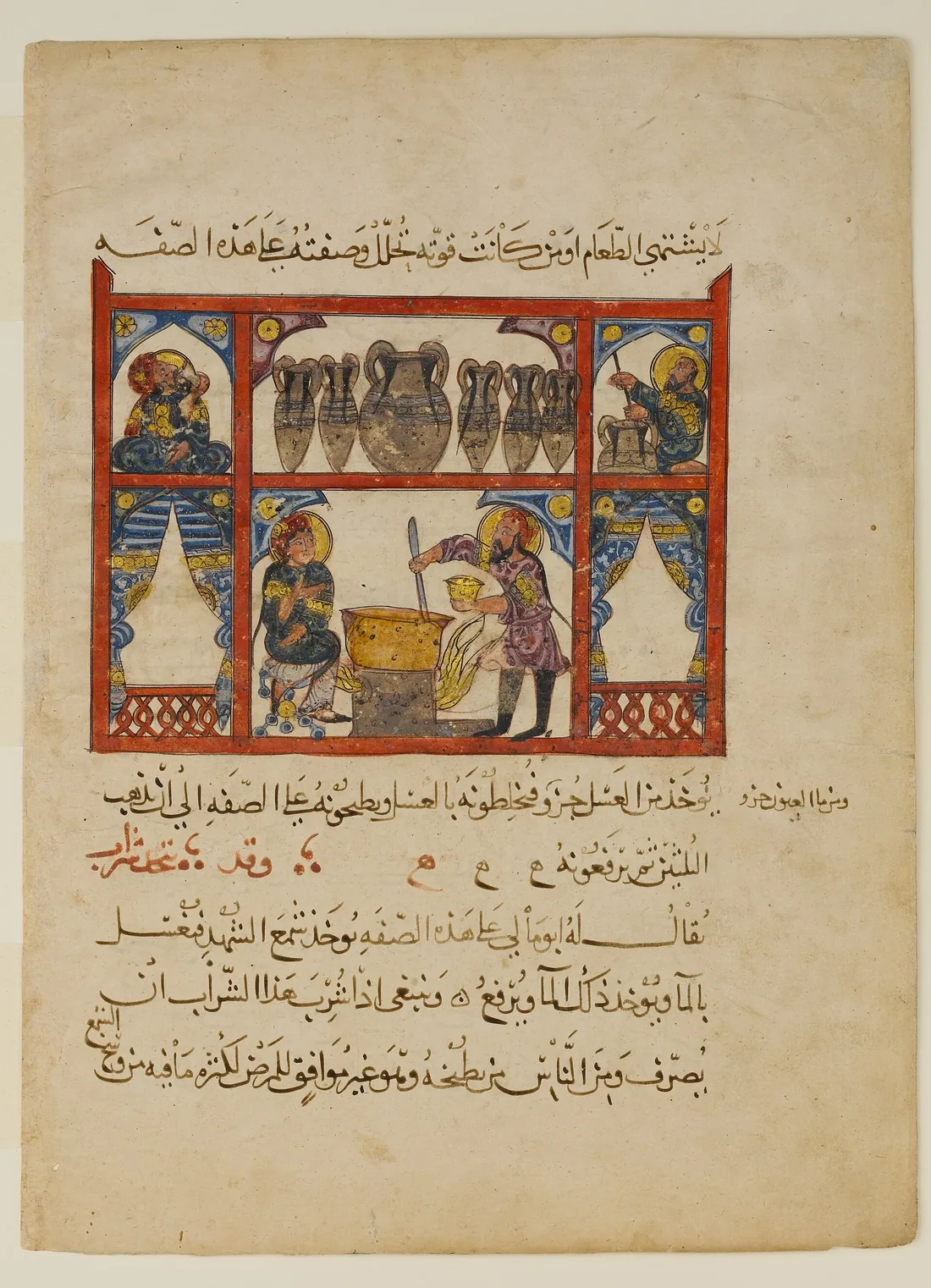
In Baghdad, at a time when disease was rife and the sick were many, a physician sat in his shop and no one knocked at his door. He was not ignorant of his craft. He was not harsh with his patients. He did not overcharge. And still his trade was dead in the very season when the trade of physicians thrives.
al-Jāḥiẓ tells us in al-Bukhalāʾ (The Misers) that a man asked the physician why his trade had failed when the sickness was plain to see and the need was real. Asad ibn Jānī gave an answer that dripped with bitterness and mockery: in their eyes I am a Muslim, and they had made up their minds — before I ever practised medicine, indeed before I was born — that Muslims never succeed at medicine. He then listed the sins he could do nothing about. His name was Asad, when it ought to have been Ṣalībā or Yūḥannā. His kunya was Abū al-Ḥārith, when it ought to have been Abū ʿĪsā. His cloak was of white cotton, when it ought to have been of black silk. His speech was Arabic, when his language ought to have been the language of the people of Jundishapur.
Jundishapur was a city in Persia, home to the venerable medical school that had trained the celebrated physicians of the court. In the idiom of our own day it was "abroad": whoever trained there saw his reputation rise, and his fee with it. Were Asad ibn Jānī brought back to life today he would find the scene familiar. A patient still puts more faith in the doctor who holds a degree from across the seas than in his counterpart trained at home, even when the two are equal in knowledge and in practice.
The story, then, is not merely one more anecdote among the tales of misers. It is early evidence of a social phenomenon with a very long life: reverence for the foreigner in learning and craft, and contempt for what is close at hand. Out of that phenomenon came a claim still repeated today in some cultural circles — that the Arab share in science was marginal, and that most of those who carried learning in Islamic civilization were not Arabs. Where did this claim come from? And how much truth is in it?
The Claim at Its Source
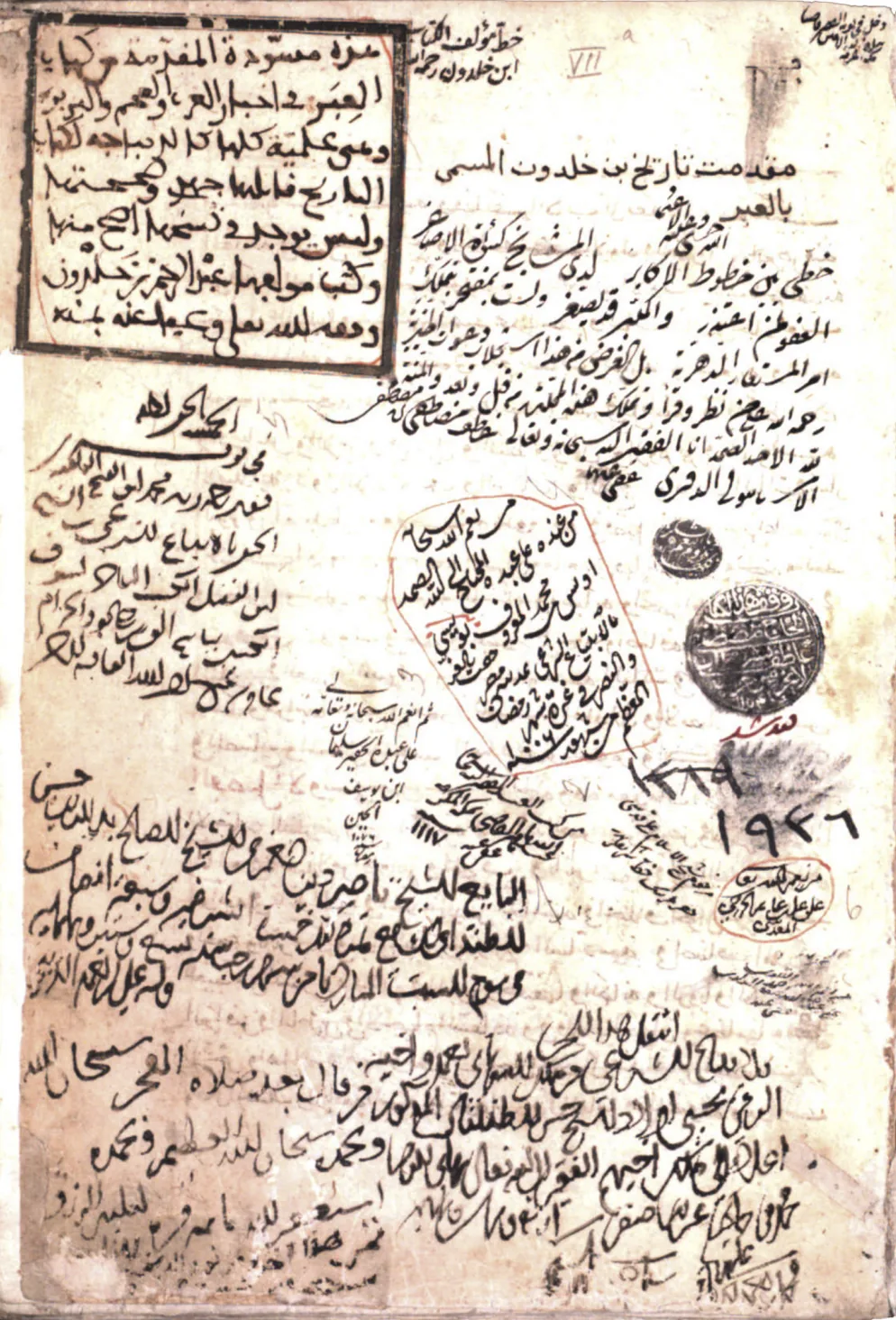
The claim was not born in the salons of the orientalists, nor in the forums of our own age. It was written in an Arab hand, by one of the greatest minds that civilization itself produced. In the Muqaddima, in a chapter devoted to precisely this question, Ibn Khaldūn writes: "It is a curious fact that most of those who carry learning in the Islamic community are ʿajam." Anyone wanting to argue that the Arabs did not carry learning finds his strongest text ready and waiting in Ibn Khaldūn. And this is the point at which to stop and look closely.
For reading the whole chapter reveals three things that undo the argument at its root.
The first is that Ibn Khaldūn does not explain the phenomenon by race, or by innate character, or by any deficiency in the Arab mind. His explanation is a purely social one. Learning, for him, is a "craft"; crafts are the business of settled people and city dwellers; and the Arabs, when the state arose, were closer to badāwa and were occupied with leadership, with rule, and with the business of jihad. The market in crafts, learning among them, was left to the people of the cities. The question is not one of blood but one of ʿumrān: wherever settled life took root, learning grew, whatever the lineage of the people who tended it.
The second is that "ʿajam," as the chapter uses the word, is not a clean category of descent. Ibn Khaldūn himself says that among the bearers of learning is the man "Arab in his lineage" and yet "ʿajamī in his language, his upbringing, and his line of teachers." His criterion is formation, upbringing and the chain of masters one studied under — not the family tree. And once the criterion is cultural formation, the whole question turns over. These very "ʿajam" — Sībawayh, al-Zajjāj and the rest — were Arabic in their formation and in their tongue, and their learning was in Arabic, through Arabic, in the service of an Arabic book. So by which of the two measures do we weigh? Weigh by lineage, and some of the bearers of learning fall outside Arabness. Weigh by formation — Ibn Khaldūn's own measure — and the whole civilization falls inside it.
The third is that Ibn Khaldūn's explanation carries within it the refutation of the generalization. If learning follows ʿumrān rather than race, then wherever the Arabs became settled they produced scholars. The witness to that is al-Andalus, where Arab ʿumrān held for centuries and brought forth Ibn Ḥazm, Ibn Rushd, the Banū Zuhr, al-Idrīsī and Ibn al-Bayṭār. The most eloquent witness of all, though, is the author of the passage himself: Ibn Khaldūn, Ḥaḍramī by descent and unambiguously Arab, who set down this observation in the greatest work of sociology written before sociology existed.
The text brandished against the Arabs turns out, on inspection, to testify in their favour twice over: a social explanation that clears them of any defect of character, and an Arab author whose mere existence refutes the charge of barrenness.
By Which Measure Do We Count?
Before we count the scholars we have to agree on the measure, because the whole disagreement is at bottom a disagreement about measures. There are three: descent, language, and cultural formation. Those who make the claim take the narrowest, descent, and use it to judge a civilization built from the start on the widest.
Begin with the relationship between Arabic and Islam. Islam is the final divine message, sent down to an Arab prophet in clear Arabic speech, and its effect fell on the Arabs before it fell on anyone else: "He it is who raised up among an unlettered people a messenger from among themselves, to recite His verses to them, to purify them, and to teach them the Book and wisdom." Then, as whole peoples entered the religion of God in throngs, they turned to Arabic — not out of courtesy but out of necessity, since Arabic is the key to the Book, to prayer, and to jurisprudence. So Arabic became the common language of learning for an entire civilization, as Latin was for European learning in the Middle Ages, and as English has become for science in our own time.
Here is a paradox that exposes how sterile the measure of descent is: Sībawayh, a Persian by descent, wrote al-Kitāb, the greatest work ever composed on Arabic grammar; and the master he studied under was al-Khalīl ibn Aḥmad al-Farāhīdī, an Arab of the Azd, who devised the science of prosody and compiled the first dictionary in the history of the language. By what reasoning do we separate the master from his student, or the learning from the tongue it was written in, and sort it all into racial columns? The civilization mixed lineages within a single language. That is its glory, not its defect.
And the measure we apply to others binds us in our own case. When the work of Newton and Darwin is credited to "English science," nobody asks about the two men's origins or the races of their ancestors. When an Arab researcher today publishes in English in Western journals, his output is counted, like it or not, in the ledger of science written in English. By the same measure, everything written in Arabic under a state Arabic in administration and in language is Arab science in the civilizational sense, whatever the descent of the person who wrote it. The question of lineage remains legitimate for anyone who cares to ask it — but it is a question about genealogies, not about civilization. We shall answer it anyway, with names, in a moment.
The Seed: A Rule That Prepared the Soil
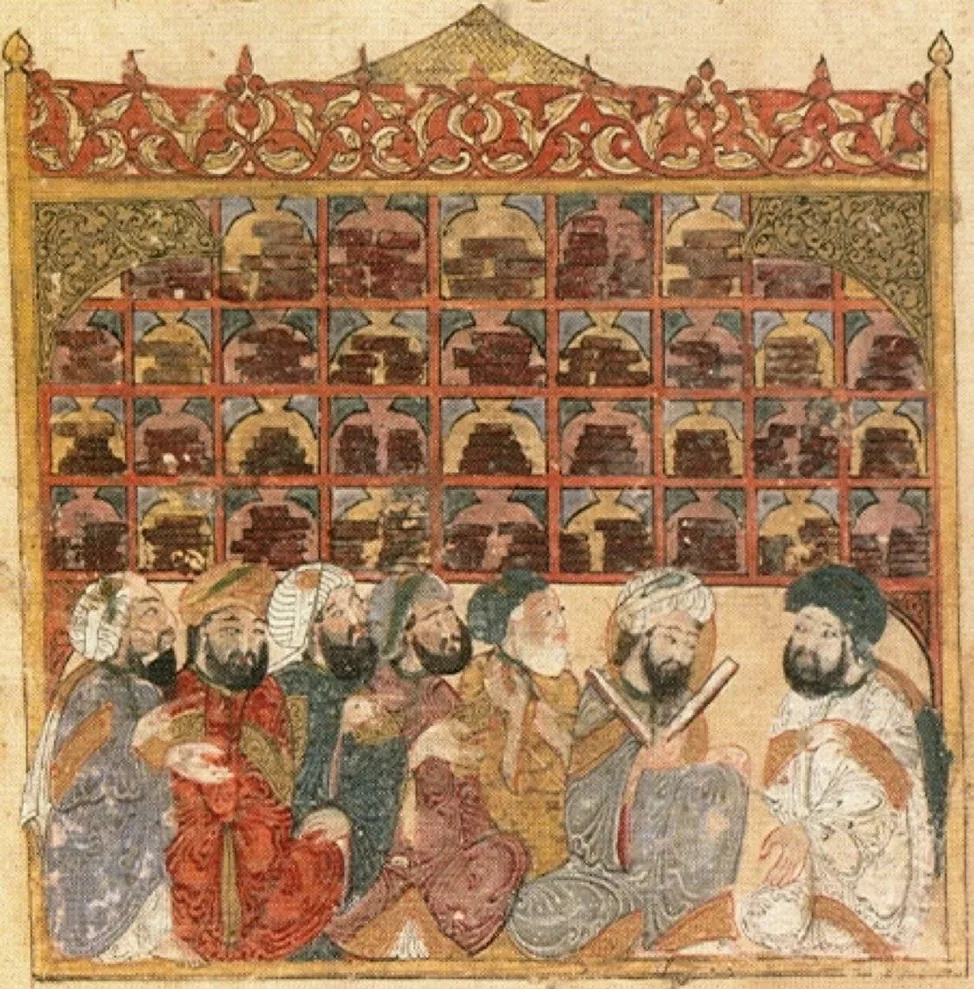
Neither translation nor science grew in a vacuum. They grew in soil prepared by a decision of state. Arab Islamic rule, at its height, made the pursuit of learning a public policy: Bayt al-Ḥikma in Baghdad was founded and maintained by the state; al-Maʾmūn corresponded with the Byzantine emperors asking for the treasures of Greek learning, and missions went out to fetch them; translators were paid lavishly, so much so that Ḥunayn ibn Isḥāq was said to be given the weight in gold of whatever he translated. Whether the report is literally true or only close to it, its meaning is the same: translation was a project of the state, not a private hobby.
More important than the money was the spirit of that age. Arab Islamic rule planted what may well be the first seed in history of an organized coexistence among people of different religions in the field of learning. Ḥunayn ibn Isḥāq, the Nestorian of the ʿIbād, was the master of the translators. Thābit ibn Qurra, the Ṣābiʾan of Ḥarrān, was the foremost figure in mathematics and astronomy. The Bukhtīshūʿ family, Nestorians, were physicians to the caliphs generation after generation. All of them worked under the wing of the state, close to power and honoured, asked not about their religion but about their learning. That tolerance was no moral luxury; it was the condition on which the flourishing of science itself depended, for learning grows only where the learned man is safe.
The patronage extended from translation to every institution of learning: the book repositories, which in Cordoba in the days of al-Ḥakam al-Mustanṣir reached a size the sources reckon in the hundreds of thousands of volumes; the Dār al-Ḥikma in Cairo; the bīmāristāns — the ʿAḍudī in Baghdad, the Nūrī in Damascus, the Manṣūrī in Cairo — which were not places of treatment only but teaching schools of medicine, with records, training and licences; and the astronomical observatories al-Maʾmūn built to verify Ptolemy's observations, not merely to transmit them.
Translation, however, was the seed and not the fruit. Two or three generations were all it took before the surpassing began: al-Rāzī writes al-Shukūk ʿalā Jālīnūs (Doubts on Galen); al-Battānī revises Ptolemy's observations and corrects them; Ibn al-Haytham turns Greek optics upside down by experiment and proof. A nation begins by transmitting, then criticizes what it has transmitted, then goes beyond it — and is a living civilization anything other than this?
Arab Scholars: The Witness of the Names
We now return to the question of descent that we set aside earlier, and we answer it under a strict rule: we name only those whose Arab lineage is established beyond serious dispute, and we pass over anyone whose origin has been contested — Jābir ibn Ḥayyān and Ibn al-Haytham, for instance — because an argument cannot be built on contested ground. All of these men were in any case sons of Arab civilization, in their language and in their formation.
al-Khalīl ibn Aḥmad al-Farāhīdī al-Azdī: the founder of ʿarūḍ (prosody), author of al-ʿAyn, the first dictionary in the history of the Arabic language, and a pioneer of phonetics.
Yaʿqūb ibn Isḥāq al-Kindī, of the tribe of Kinda: "the Philosopher of the Arabs," who brought together philosophy, mathematics and music. In his work on encipherment and the recovery of enciphered text he laid the foundation of codebreaking by letter-frequency analysis.
al-Aṣmaʿī al-Bāhilī: the master of language and of transmission, author of treatises on animals, plants and man — the forerunner of what we today call the descriptive natural sciences.
al-Masʿūdī al-Hudhalī, a descendant of ʿAbd Allāh ibn Masʿūd: historian, geographer and traveller, author of Murūj al-Dhahab (Meadows of Gold).
Abū al-Qāsim al-Zahrāwī al-Anṣārī, from the outskirts of Cordoba: the father of surgery, author of al-Taṣrīf li-man ʿAjiza ʿan al-Taʾlīf, in which he described and illustrated some two hundred surgical instruments. It remained the standard reference for surgery in Europe for centuries.
Ibn Ḥazm al-Andalusī: the Ẓāhirī polymath — jurist, historian of religions and sects, and critic — and the author of early insights into textual criticism and the comparison of religions.
Banū Zuhr al-Iyādī, the most famous of them Abū Marwān ibn Zuhr: a medical family that handed the craft down through generations. Abū Marwān stood out for his clinical sense, his use of experiment, and his exact description of diseases.
Ibn Rushd al-Qurṭubī: chief judge, and the commentator-philosopher who returned Aristotle to Europe; a physician too, author of al-Kullīyāt fī al-Ṭibb.
al-Sharīf al-Idrīsī al-Ḥasanī al-Hāshimī: author of Nuzhat al-Mushtāq and of the most accurate world maps of the Middle Ages.
Ibn al-Bayṭār al-Mālaqī: author of al-Jāmiʿ li-Mufradāt al-Adwiya wa-l-Aghdhiya, the greatest encyclopaedia of plant-based pharmacy before the modern era.
Ibn al-Nafīs al-Dimashqī: the discoverer of the pulmonary circulation, centuries ahead of the Europeans — a forthcoming article in this series will give him his due.
Ibn Khaldūn al-Ḥaḍramī: the founder of ʿilm al-ʿumrān, the science of human social organization, whom we have already met here as both witness and opponent.
Aḥmad ibn Mājid, "Lion of the Seas": the master of the science of navigation and author of al-Fawāʾid fī Uṣūl ʿIlm al-Baḥr wa-l-Qawāʿid.
And the list runs on: Ibn Jubayr the traveller; Ibn Saʿīd al-Maghribī; Lisān al-Dīn ibn al-Khaṭīb, known to readers of this series as a physician ahead of his age on the theory of contagion and as a minister who paid for his boldness with his life. Where, in this crowd, is the "rare handful"? The truth is that Arabs are present in every one of the sciences of their civilization, and that their brothers among the Persians, the Turks, the Berbers and every other people are present alongside them. That is how the great world civilizations work. No great civilization was ever a closed club of bloodlines.
Was Arab Medicine Merely "Talk"?
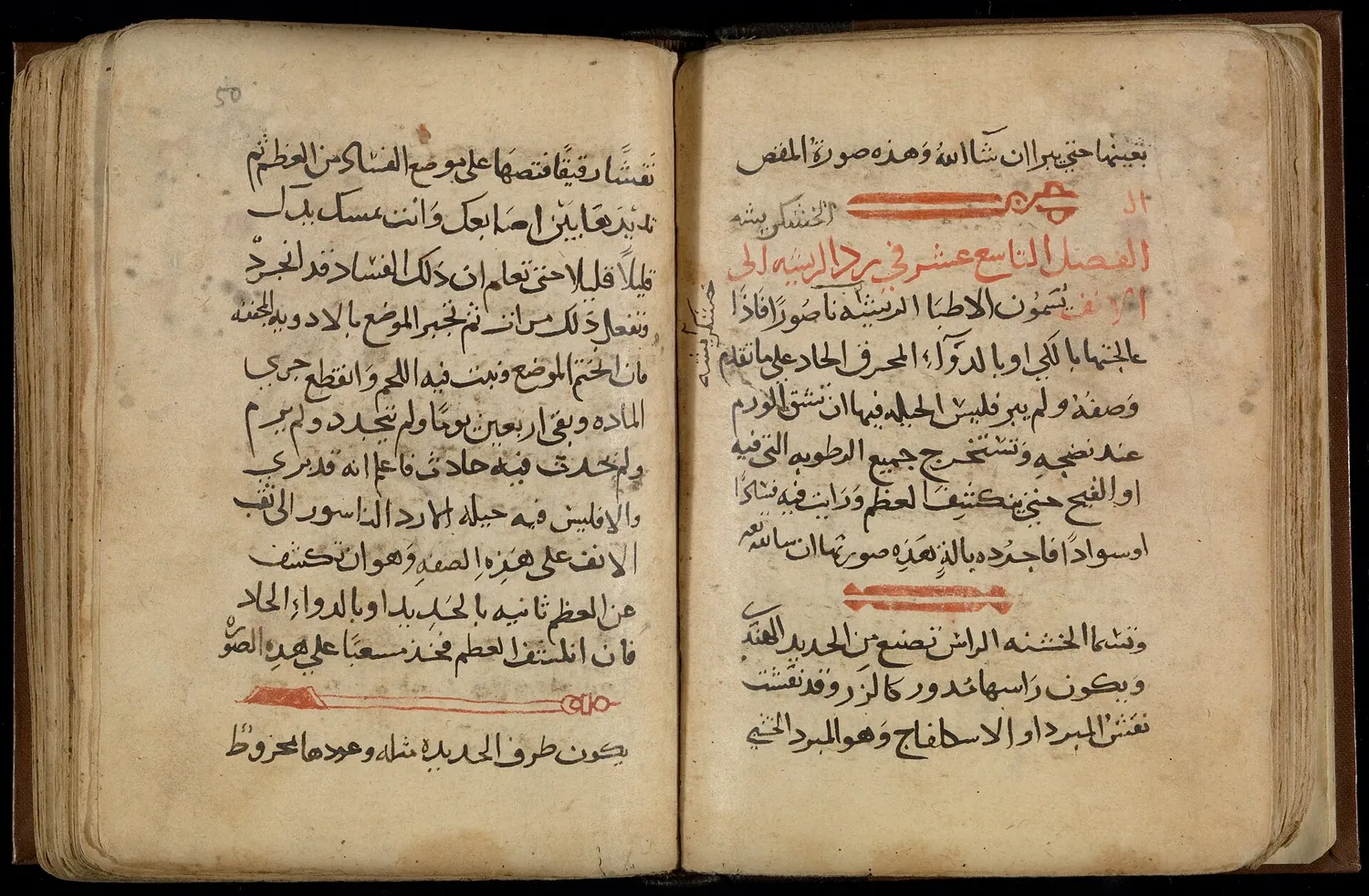
One last objection is usually attached to the first, and some friends repeat it in good faith: that old Arab medicine was a medicine of "talk," theoretical rather than experimental. The objection falls apart as soon as we are clear about what is actually in dispute. A fair comparison is between Arab medicine and the medicine of its own time, not between it and the medicine of the twenty-first century. Everywhere in the world — among the Greeks before them, and in Europe after them right up to the nineteenth century — medicine rested on observation at the patient's bedside, because the instruments of experiment did not exist: no microscope, no laboratory, no biochemistry. Anyone who calls Arab medicine mere talk on that ground is bound to say the same, and with more reason, of Hippocrates, of Galen, and of European medicine down to the Renaissance.
What escapes those who raise this objection is that the physician among the Arabs was a philosopher before he was a physician. No one took up the craft until he had furnished himself with the religious sciences, with logic, and with theology — so much so that the physician's title in their tongue became al-ḥakīm, the sage, as it still is in some of our countries today. al-Rāzī was a philosopher with works of his own in metaphysics and ethics; with Ibn Sīnā, the Shaykh al-Raʾīs, philosophy stands at the head of his output, ahead of medicine; Ibn Rushd was a jurist and a judge and a philosopher before he was the author of the Kulliyyāt; and Ibn al-Nafīs was a Shāfiʿī jurist who taught law in the schools of Cairo. They were philosophers who practised medicine, not physicians who dabbled in philosophy — and this formation was neither a luxury nor "mere talk": a man trained in logic, in the discipline of definitions and of the syllogism, came to the patient's bedside with a mind that knew how to infer and when to doubt, and that is the first condition of experiment, not its opposite.
Beyond that — and this is the real evidence — the Arabs went a long way with experiment, as far as the tools of their age allowed. al-Rāzī, in what he reports in al-Ḥāwī, deliberately bled one group of the patients in whom the early signs of sirsām — what we now call meningitis — had appeared, and left another group unbled, so that he could compare the outcomes. That is the idea of the control group, a thousand years before anyone formulated it. He is also the author of al-Shukūk ʿalā Jālīnūs (Doubts on Galen), the book in which he confronted the highest medical authority in history with his own clinical observations, and laid down the rule that is the whole spirit of experiment: that what you observe takes precedence over what is written, however great the man who wrote it.
Then came Ibn Sīnā, who put experiment on formal rules. In the Qānūn he set out conditions for testing drugs, among them: that a drug be tested on a simple illness rather than a compound one, so that causes do not become entangled; that the strength of the drug be weighed against the strength of the disease; that the time at which the effect appears be noted; that the result be required to hold in most cases and not in a single instance; and that the trial be conducted on the human body, because what holds in another body may not hold in a human one. Let anyone read these rules and then set them beside the conditions of the modern clinical trial, and judge for himself: is this the talk of "theologians," or the method of experimenters? We have set out the logic of scientific reasoning at length — from observation to hypothesis to test — in our article How the Sciences Evolve, for anyone who wants to go further.
Even so, we do not answer one exaggeration with another. We do not claim that the Arabs "invented the experimental method" in its finished modern form. To defeat the charge it is enough to establish what is documented: that the experimental spirit was present in their medicine, present in a way no fair observer can miss, and that in this they stood at the head of their age rather than at its tail.
Back to the Shop
If Asad ibn Jānī were raised from the dead today, he would not need to change a single letter of his answer. He would only swap Jundishapur for the name of some Western capital. The attitude that ruined his trade twelve centuries ago was never a judgement about science; it was a judgement about the people who practise it — a long-lived social bias that honours what is far away and undervalues what is near at hand. It is the same bias that today produces the claim that the Arabs passed through their own civilization as guests.
We have seen that the claim collapses from every side. The passage of Ibn Khaldūn on which it leans is a social explanation, not a racial verdict. The scale it weighs on is a scale of pedigrees, not of civilizations. Unmistakably Arab names are present in every science, in crowds rather than as isolated individuals. It was the Arab state that planted the seed, tended the crop, and opened its doors to every scholar of every religion. And the medicine said to be mere talk was as experimental as the hand of that age could make it.
Civilizations are not counted by family tree. They are counted by their language, by the social order they build, and by what they leave behind in the mind of humanity. The question "how many scholars were Arab by descent?" is shuʿūbī in its very structure — it was so in the old days, when it was a weapon in a war of races, and it is so today, when it is repeated with no awareness of where it came from. The answer that history deserves is this: the Arabs carried science as a language, as a state, and as men, and their brothers from every people shared it with them under the roof of a single civilization whose tongue was Arabic. Let that be answer enough, and pride enough — a pride with room in it for everyone.
This is a translation of an essay written in Arabic. Quotations from the Qurʾān are rendered for sense; the Arabic page carries them in the original.
NEUTRAL FACT CHECKER
The factual claims in this essay were checked against their sources: al-Rāzī's text in al-Ḥāwī, Ibn Khaldūn's chapter on the bearers of learning, al-Jāḥiẓ's account in al-Bukhalāʾ, and Ibn Sīnā's conditions for testing a drug in the Qānūn — all verbatim from a local copy of the Shamela library — together with the institutional claims and the descent of each of the thirteen scholars named, and a plagiarism scan. The paragraph on the physician as philosopher was added after publication and checked separately, in a dated section of its own. The result is published as it came out, including the findings the essay was not changed to accommodate. The fact-check is written in Arabic: read the neutral fact-check →
© 2026 Husain Alkhaldy — published in the site's essays.