The Bond of Inherited Belief
In the town of Ṭūs in Khurāsān, in the second half of the fifth century of the Hijra, a boy stood looking at something that everyone sees and nobody pauses over. The Christian children of the quarter grew up Christian. The Jewish children grew up Jewish. The Muslim children grew up Muslim. Each of them inherited his certainty the way he inherited his name and his language, without choosing it and without being asked. That inheritance is what the tradition calls taqlīd: belief taken on the authority of the people who hand it down. The boy grew up to become Abū Ḥāmid al-Ghazālī, Ḥujjat al-Islām, the Proof of Islam, and he held the most eminent teaching chair in the world of his day, at the Niẓāmiyya of Baghdad. Near the end of his life he sat down and told, in Deliverance from Error (al-Munqidh min al-Ḍalāl), how the whole thing had started:
"The bond of taqlīd came loose from me, and the beliefs I had inherited broke apart, while I was still close to the age of boyhood. I had seen that Christian children are brought up in nothing but Christianity, that Jewish children are brought up in nothing but Judaism, and that Muslim children are brought up in nothing but Islam. And I had heard the hadith reported from the Messenger of God, peace and blessings be upon him: every child is born upon the fiṭra, and it is his parents who make him a Jew, a Christian or a Magian. Something stirred in me to find out what that original fiṭra really is, and what these other beliefs really are, the ones a person picks up by imitating his parents and his teachers."
Al-Ghazālī was not casting doubt on his religion. He came out of his ordeal with a deeper faith than he had taken into it. What he did was put his finger on a fact that comes before every argument. The large ideas are put into a person before his critical apparatus is finished. By the time the apparatus is working, its owner finds the moulds already in place, and he now works from inside them while he believes he is working on them. The hadith that shook him has its root in the two Ṣaḥīḥs, and it makes the same point in the fewest possible words. The mould is cast in the child before he can reason, at the hands of the people he loves most and who mean him nothing but good.

The Acquired Moulds
This essay is about those moulds. I do not mean the biases built into the hardware of the brain itself, the ones that affect every human being whatever his creed or his origin: anchoring, availability, and the rest of that family. That is another story and belongs somewhere else. I mean the acquired moulds, the religious and sectarian ones, the social, the educational and the political. Each of us is handed them along with his name. Before long they stop being opinions we hold and turn into eyes we see with. A man then reads the very same facts his opponent reads, and each of them comes away from the reading more certain of what he brought to it. Both are sincere when they swear they were only following the evidence. Has anyone addressed this disease before us? The answer is that the whole history of thought, in the East and in the West, is very nearly a record of the hunt for it. Few ideas have travelled a stranger road than this one, and few have kept their breath so long.
The first to name the disease was the Qurʾān: "Have you seen the one who takes his own desire as his god, and God leads him astray despite his knowledge?" [al-Jāthiya: 23]. Stop at "despite his knowledge." The straying here does not come from a shortage of information. It runs on top of the information and alongside it. The knowledge is present, and desire recasts it in its own mould. Desire becomes a god, and it is worshipped through interpretation and exegesis, while the worshipper thinks he is using his mind. We shall see at the end of this essay that the most recent experiments in psychology have done nothing more than prove this verse with numbers. The most learned and the most skilled can be the furthest astray on exactly the questions that touch their own desire. In the previous essay, "Do They Not Reason?", I left the reader with a verse that puts the fault in its precise place: "Have they not travelled the earth, so that they might have hearts to reason with, or ears to hear with? It is not the eyes that go blind; it is the hearts inside the chests that go blind" [al-Ḥajj: 46]. I promised then to pursue that thought further, and this whole essay is the keeping of that promise. The eyes are sound. The evidence reaches them as it is. The damage is in the reasoning apparatus itself, in the heart that takes in what the eye saw and pours it into its mould before it puts it on trial. Let me say plainly at the outset that all of this is a critique of the human reasoning apparatus as it receives texts, reports and events. It touches neither revelation itself nor the settled matters of the religion. The fault I am dissecting is a fault in the mirrors, not in the light.
The Heart Is a Mirror, and Desire Is the Rust
Our own scholars caught hold of this thread early. Ibn al-Qayyim could be describing this blindness of the heart directly when he set down, in Ighāthat al-Lahfān, the finest image the tradition has for it: "The heart is like a mirror, and desire is like rust upon it. When the mirror is clear of rust, the forms of things print themselves on it as they really are. When it has rusted, the forms of what is known do not print themselves on it, and so the man's knowledge and his speech become guesswork and conjecture." That is a complete model of cognition in two lines. The damage is not in the information coming in. It is in the surface the information lands on. A rusted mirror does not lie on purpose. It reflects what reaches it crooked, in perfect confidence that it is reflecting.
To Make Himself the Adversary of Everything He Reads
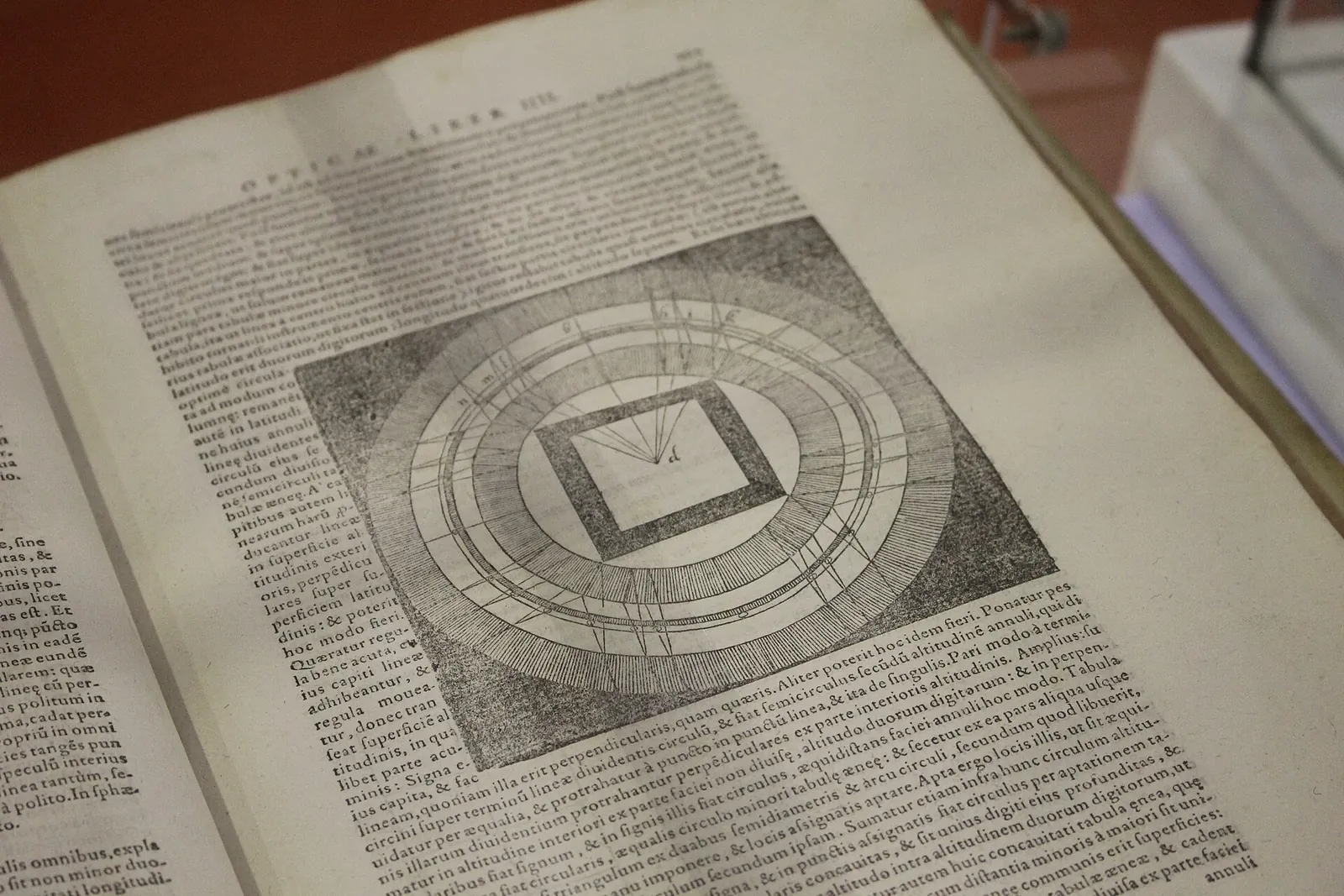
Three centuries before Ibn al-Qayyim, Ibn al-Haytham had written, in the preface to Doubts on Ptolemy (al-Shukūk ʿalā Baṭlamyūs), the oldest methodical prescription we know of for resisting the moulds. He begins by laying it down that God did not protect the scholars from error. Then he sets out the distinction: "the seeker of truth is not the one who studies the books of his predecessors and gives way to his natural inclination to think well of them; the seeker of truth is the one who holds his own good opinion of them under suspicion." From that follows the counsel that has outlived him: "Whoever studies the books of the sciences, if his purpose is to know the truth, is obliged to make himself the adversary of everything he reads." His contemporary al-Bīrūnī put that counsel to work in the hardest field there is for it: describing the religion of a people whose fundamentals of belief were not his. In the preface to Taḥqīq mā li-l-Hind (India) he announced that he would report the doctrines of India "without slandering my opponent, and without shrinking from reporting what he says even where it departs from the truth." His book, he said, "is not a book of disputation and polemic … it is a book of report." He separated the reporting from the judging on purpose. He knew that the mould slips into the description before it slips into the verdict, and that is why historians of religion count him the pioneer of fair comparative study.
A Veil Over the Eye of Insight
Then came Ibn Khaldūn, who put his finger on the mechanism itself with a precision that startles a reader today. In the Muqaddima, listing the causes that let falsehood creep into historical reports, he began with this one before any other: "One of them is partisanship for opinions and for schools of thought. If the soul is in a balanced state when a report reaches it, it gives that report its full due of scrutiny and examination, until it can tell the true in it from the false. But if the soul is tinged with partisanship for some opinion or creed, it accepts at first glance whatever agrees with it. That leaning and that partisanship become a veil over the eye of its insight, keeping it from criticism and scrutiny, so that it falls into accepting falsehood and passing it on." Note exactly what he says. It is not that the partisan lies. It is that scrutiny itself is handed out selectively: severe with an opponent, slack with an ally. The leaning is "a veil over the eye of insight," not a veil over the tongue. The world would need six more centuries and a laboratory at Stanford to prove that sentence with numbers.
Idols of the Cave and the Theatre
On the other shore of the Mediterranean, two centuries after Ibn Khaldūn, Francis Bacon opened the door through which the whole of modern science would walk. He opened it in Novum Organum (1620), and not with a method of experiment alone. He opened it with an inventory of the obstacles that stand between the mind and the truth. He called them the Idols, and he made them four. The Idols of the Tribe are the ones planted in the human nature we all share. The Idols of the Cave are each person's own cave: his upbringing, his surroundings, his reading, and the men he has held in awe. The Idols of the Marketplace are the confusions that words in common use impose on thought. The Idols of the Theatre are the inherited systems and philosophies, played out on the stage of the mind as complete worlds and taken on trust. The Cave and the Theatre are exactly my subject: the moulds that upbringing and belonging cast in us. In the same book Bacon wrote the passage that historians of psychology count as the first exact diagnosis of what we now call confirmation bias. Once the human understanding has laid down a proposition, it drags everything else in to support and confirm it. However abundant and however cogent the instances it meets to the contrary, it either fails to observe them, or despises them, or sets them aside by some distinction, rather than let the authority of its first conclusions be touched.
From the Printing Shop: The Stereotype
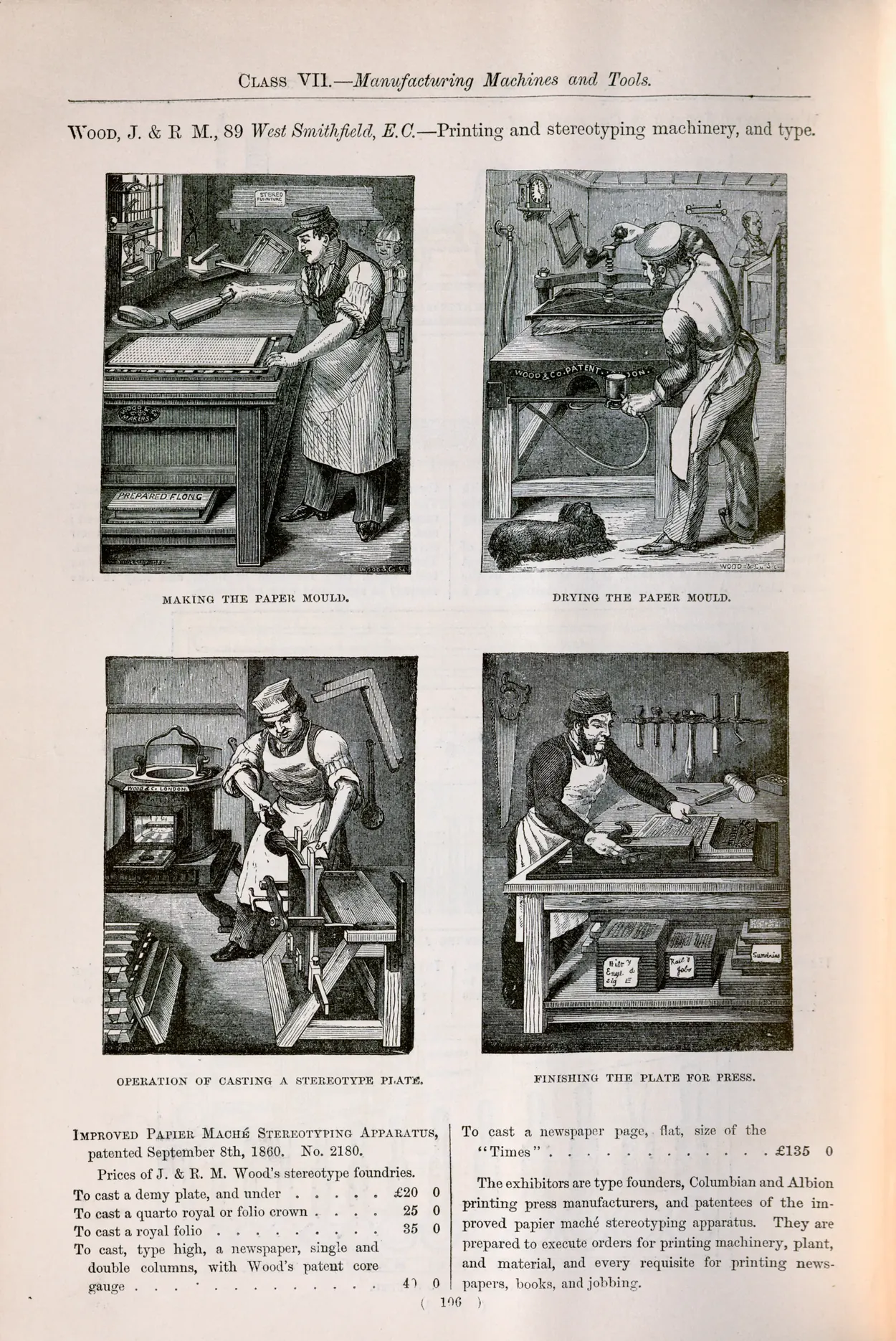
Then the metaphor that gives this essay its subtitle arrived from a quarter nobody would have thought to look in: a printing shop. When printers in the nineteenth century wanted to run a page off thousands of times, they took its rows of assembled letters and cast them into one solid slab of metal. That slab was a single fixed mould of the whole page, and they called it a stereotype. As long as the mould stood, the same page came out of it, however much the world outside the press had changed. In 1922 the American journalist and thinker Walter Lippmann lifted the word out of the lead and carried it into the mind, in his book Public Opinion. We do not deal with reality directly, he argued, but with "pictures in our heads" that arrive before it and take it in. He summed the matter up in the sentence that became the motto of the whole subject: "For the most part we do not first see, and then define, we define first and then see." Lippmann never claimed that anyone could live without moulds. Reality is too wide, too complicated and too fast for anyone to perceive it at first hand, moment by moment, and the mould is an economy of mental effort we cannot do without. The danger, the whole of the danger, is that we forget they are moulds, and take the picture in our heads for the world itself.
When the Idea Entered the Laboratory
Up to this point the idea was a penetrating observation. Then it entered the laboratory. In the 1950s the psychologist Leon Festinger and his colleagues slipped into a small group in America whose leader had prophesied a flood that would end the world at dawn on a fixed day. They sat among her followers and watched. What does certainty do when it meets reality face to face? The appointed hour passed and nothing happened. Did the group break up? It did the opposite. Its most committed members, the ones who had sold their houses and given up their jobs, went out to the press to preach for the first time, once she was inspired with a new explanation: it was our faith that saved the world. Festinger told the story in When Prophecy Fails, and built on it his theory of cognitive dissonance. When reality collides with a belief we have built our lives on, adjusting reality, by interpretation and by selection, is often cheaper for the soul than adjusting the belief.
In 1990 Ziva Kunda gathered the scattered work of this field into her landmark paper on motivated reasoning. Her conclusion was that human thinking often runs not toward the truth but toward a conclusion wanted in advance — under one polite constraint: that the thinker keep up the appearance of objectivity in his own eyes. He does not believe just anything at random. For whatever he wants to be true, he builds a file of justifications that looks rational and coherent. Jonathan Haidt gave the picture its final form in The Righteous Mind. Reason does not work in us the way a judge works, weighing the evidence and then ruling. It works the way a lawyer works, or rather a press secretary: it takes the verdict ready-made from intuition and belonging, then goes off to draft the reasons for it.
You may object that this is the disease of ordinary people, and that intelligence and education are its cure. Two harsh studies have disposed of that hope. Keith Stanovich, in work crowned by his book The Bias That Divides Us, showed that myside bias — the tendency to weigh evidence and arguments in whatever way serves one's prior position — is barely correlated with measured intelligence at all. Intelligent people do not get free of their moulds. They defend them with more skill and a fuller magazine. Then came Dan Kahan, with the experiment that has become a landmark here. He gave his participants a single table of numbers that needed careful arithmetic to yield a result. When they were told the figures came from a trial of a skin cream, the participants with high numerical skill solved it accurately. When they were told that the same figures were about the effect of a gun-control law, a question of party identity in America, the whole picture reversed. The best at arithmetic became the most likely to distort the result whenever it went against their camp, conscripting their skill to fend the result off rather than to understand it. The skill did not protect its owner. It became a weapon in the hands of the mould. And here the verse echoes back: "and God leads him astray despite his knowledge."
Biased Assimilation
The clearest field in which this whole apparatus shows itself is the way we read a disputed question, and that is the point this essay has been building toward. The founding experiment was run at Stanford in 1979 by Lord, Ross and Lepper. The researchers brought in supporters of the death penalty and opponents of it, and showed both groups the same two studies, word for word: one supporting the deterrent value of the penalty, the other denying it. What did they find? Each side found the study that agreed with it rigorous in method and convincing in argument, and found the study that disagreed with it riddled with methodological holes. Some of those holes were real. But they were the same holes that sat in the study the side had accepted without a qualm. Stranger still was what came next. Both groups left the same file further apart and more extreme than when they came to it. The identical evidence, word for word, deepened the disagreement instead of settling it. The researchers named the phenomenon "biased assimilation," and the result has been reproduced since across dozens of contested questions.
The mechanism, and this is the crux of the matter, is neither lying nor deliberate neglect. It is closest to what statisticians call selection bias. A researcher's study is ruined if he picks his sample to suit himself, however honest he believes himself to be. A reader's perception is ruined in the same way, because his mind selects what it takes in from an opponent's words without asking his permission and without his noticing. Arguments on his side arrive whole, vivid and well kept. Arguments against him arrive truncated, faded, and quick to evaporate from memory. So the sample on which a man tries the dispute is rigged from the start, and he is telling the plain truth when he swears he has read both sides. An earlier filter sits in front of this one, and researchers call it selective exposure. We keep company only with those who agree with us, and we follow only their platforms, so the opposing case reaches us only in fragments, quoted by its enemies. Then comes the double standard, which Thomas Gilovich reduced to two questions. Faced with news we like, we ask, "Can I believe this?" The flimsiest support will do. Faced with news we dislike, we ask, "Must I believe this?" Now nothing short of irrefutable proof will do. Both questioners feel, quite sincerely, that they have used their judgement and been fair. This is exactly Ibn Khaldūn's scale: scrutiny tightened on one side and loosened on the other, with partisanship a "veil over the eye of insight."
"And They Will Not Cease to Differ"
Look through this lens at any chronic dispute, doctrinal, intellectual or social, and you will find the two sides reading the same texts, the same history and the same events, and doing so for centuries. Every round of reading leaves each side more firmly entrenched. The text I take as clear and decisive is the ambiguous one you take as needing interpretation. Each community's account of history is the chain of events its collective memory happened to pick up, with everything else dropped. Nobody ever sat down and decided what to drop. And here the verse shows its force: "Had your Lord willed, He would have made all people a single community, and they will not cease to differ" [Hūd: 118]. The permanence of disagreement is not an accident that more data will clear away. It is a standing law, for as long as one and the same data are read through different moulds. In social and political affairs you can watch a single incident prove the contradictory claims of both camps at once, in the same moment and on the same screen, and each side then marvels at the other's blindness. Even medicine, which its own method ought to have immunized, knows the phenomenon by name: premature closure. The diagnosis forms in the physician's mind in the first few minutes. Every symptom that follows is then read as supporting it, and whatever does not fit is set aside in perfect good faith. It is among the most frequently documented causes of diagnostic error in the patient-safety literature, as Pat Croskerry has shown in his work on cognitive error in diagnosis. The mould respects no laboratory, no school and no speciality.
What, Then, Do We Do?
What, then, do we do? The first thing that has to go is the comfortable illusion every one of us repeats about himself: "I only followed the evidence where it led." What we have seen across this whole journey, from Ibn al-Qayyim's mirror to Kahan's numbers, is that the evidence is very often the follower and we are the ones leading. The feeling of being fair carries no weight as testimony, because it attends the fair man and the unfair man in equal measure. The second thing that has to go is the opposite illusion: that deliverance lies in smashing the moulds altogether. Lippmann was right to say that the moulds are the mind's economy and a necessity of its life, and that nobody starts each morning understanding the world from zero. The difference, then, is not between a man who has a mould and a man who has none, since the second man does not exist. It is between the man who knows there is a mould in his head and holds it with a suspicious hand, and the man who takes his mould for the world itself. So I end where our own tradition began, with Ibn al-Haytham's counsel, this time in full. He guarded both flanks like a man who knew the disease. Make yourself "the adversary of everything you read." Then, and this is what completes the counsel, "suspect yourself too as you contend, so that you neither bear down too hard nor let too much pass." Suspect the text, and suspect your own suspicion of it. Desire slips into refutation exactly as it slips into acceptance. "For if a man follows this path, the truths will be revealed to him."
Knowing the disease is half the road, though, not all of it, and the practical question is still hanging. If we have no control over the inputs, if the moulds were cast before we had any choice and the data force their way into our minds unasked, where does our freedom begin? It begins where this essay ends: with the part reason plays in building our conceptions and in correcting them when they need it. A man cannot stop the torrent from running, but he can train the thinking apparatus itself. He can learn his biases by name, watch the places where they slip into his judgements, and give his mind working methods that hem those biases in before they take hold. That is the subject of my next essay, God willing.
❖
Further Reading
From the classical tradition:
- al-Ghazālī, Deliverance from Error (al-Munqidh min al-Ḍalāl), Shamela Library: https://shamela.ws/book/9246
- Ibn Khaldūn, the Muqaddima — the chapter on the causes of falsehood in historical reports, Shamela Library: https://shamela.ws/book/12320
- Ibn al-Qayyim, Ighāthat al-Lahfān, Shamela Library: https://shamela.ws/book/11688
- al-Bīrūnī, Taḥqīq mā li-l-Hind (India), Shamela Library: https://shamela.ws/book/11655
- Ibn al-Haytham, Doubts on Ptolemy (al-Shukūk ʿalā Baṭlamyūs), edited by ʿAbd al-Ḥamīd Ṣabra and Nabīl al-Shihābī, Dār al-Kutub al-Miṣriyya, 1971, Internet Archive: https://archive.org/details/alshukukalaptolemy
From the Western classics:
- Francis Bacon, Novum Organum (1620) — the theory of the four idols: https://www.gutenberg.org/ebooks/45988
- Walter Lippmann, Public Opinion (1922) — the origin of the term "stereotype": https://www.gutenberg.org/ebooks/6456
- Leon Festinger et al., When Prophecy Fails (1956): https://archive.org/details/whenprophecyfail0000fest
From modern research:
- Lord, Ross & Lepper (1979) — the Stanford experiment on biased assimilation: https://doi.org/10.1037/0022-3514.37.11.2098
- Ziva Kunda (1990) — the reference paper on motivated reasoning: https://doi.org/10.1037/0033-2909.108.3.480
- Kahan et al. (2017) — the motivated numeracy experiment: https://doi.org/10.1017/bpp.2016.2
- Keith Stanovich, The Bias That Divides Us (MIT Press, 2021): https://mitpress.mit.edu/9780262045759/the-bias-that-divides-us/
- Jonathan Haidt, The Righteous Mind (2012): https://righteousmind.com/
- Thomas Gilovich, How We Know What Isn't So (1991): https://archive.org/details/howweknowwhatisn00gilorich
- Croskerry (2003) — cognitive error in medical diagnosis: https://doi.org/10.1097/00001888-200308000-00003
This is a translation of an essay written in Arabic. Quotations from the Qurʾān are rendered for sense; the Arabic page carries them in the original.
NEUTRAL FACT CHECKER
A neutral fact-checker went over the essay's factual claims: its five classical quotations from al-Ghazali, Ibn al-Qayyim, Ibn al-Haytham, al-Biruni and Ibn Khaldun; the Bacon passage and the Lippmann sentence against their own originals; the identifiers of the four psychological studies; and the three date intervals. It did not weigh the essay's argument. The result is published as it came out, and the essay was not edited to agree with it. The fact-check is written in Arabic: read the neutral fact-check →
© 2026 Husain Alkhaldy — published in the site's essays.