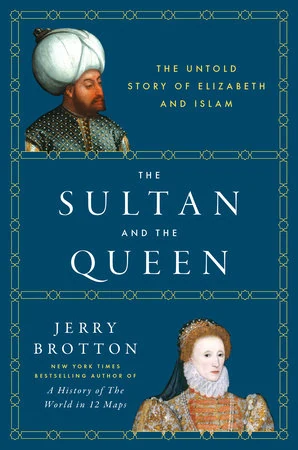
We carry in our minds a ready-made image of the relationship between Europe and the Muslim world in past centuries: a continuous clash of civilizations, two opposing fronts crossed only by the sword. The British historian Jerry Brotton's book demolishes that image with documents, letters, and trade records. The story they tell is astonishing. In the second half of the sixteenth century, Protestant England under Queen Elizabeth I found itself isolated within Catholic Europe, and it extended its hand to the Ottoman Empire, Saadian Morocco, and Persia — out of necessity, not romance. Between London, Istanbul, and Marrakesh a network of diplomacy, trade, and cultural influence took shape. It revealed that interests often preceded creeds, and that the "borders" between civilizations are far more porous than the grand narratives tell us. From this central thesis, the book's chapters unfold.
First: Politics — Isolation Creates Alliances
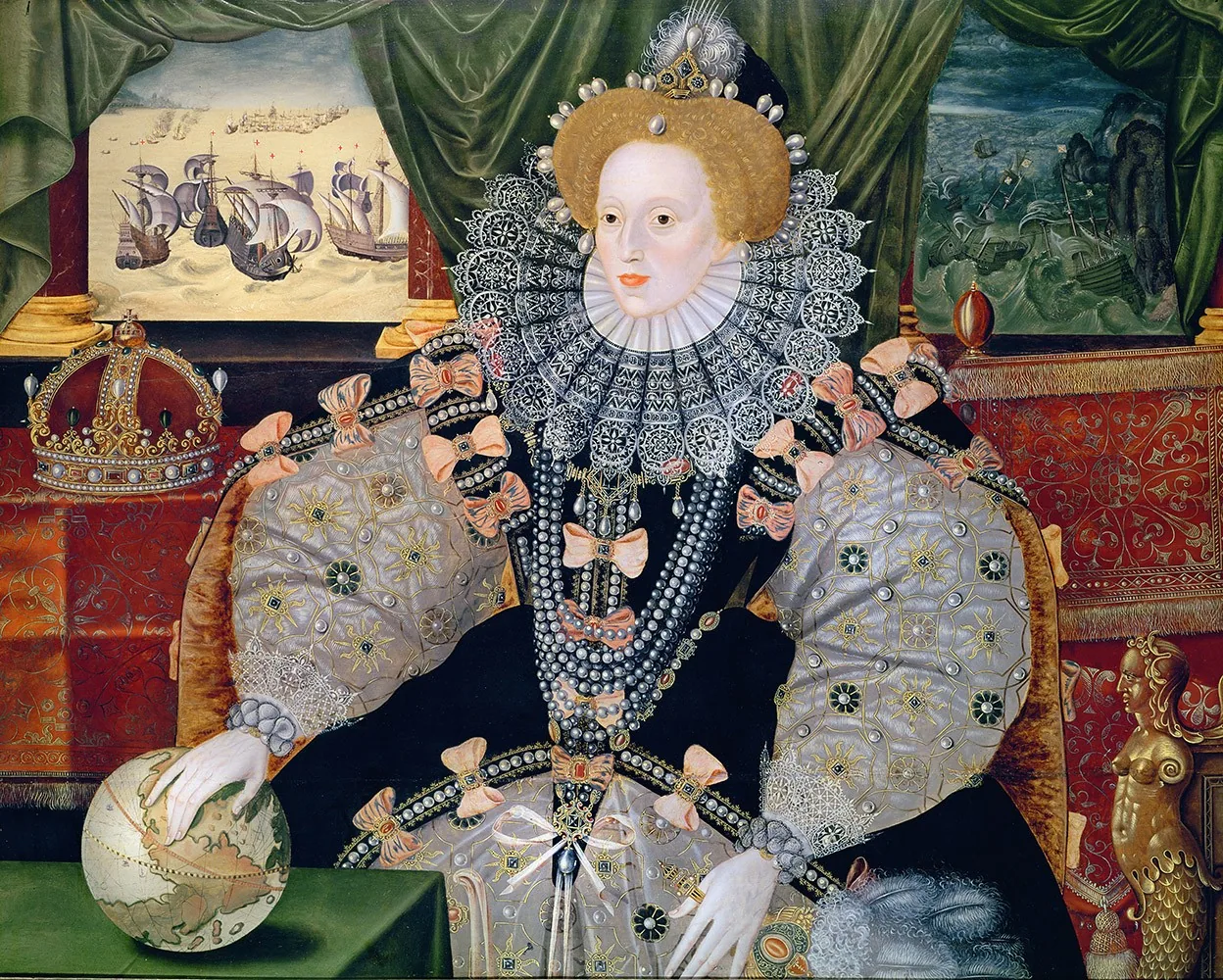
The turning point on which Brotton builds his narrative is the year 1570, when Pope Pius V excommunicated Elizabeth and effectively licensed the removal of the "heretic queen." England suddenly found itself outside the Catholic European house, with Philip II's Spain lying in wait. The political logic that followed was simple: the enemy of my enemy is my friend. The Ottoman Empire under Murad III was Spain's greatest rival in the Mediterranean. Morocco under Ahmad al-Mansur had just shattered Iberian ambitions at the Battle of Wadi al-Makhazin, the Battle of the Three Kings (1578).
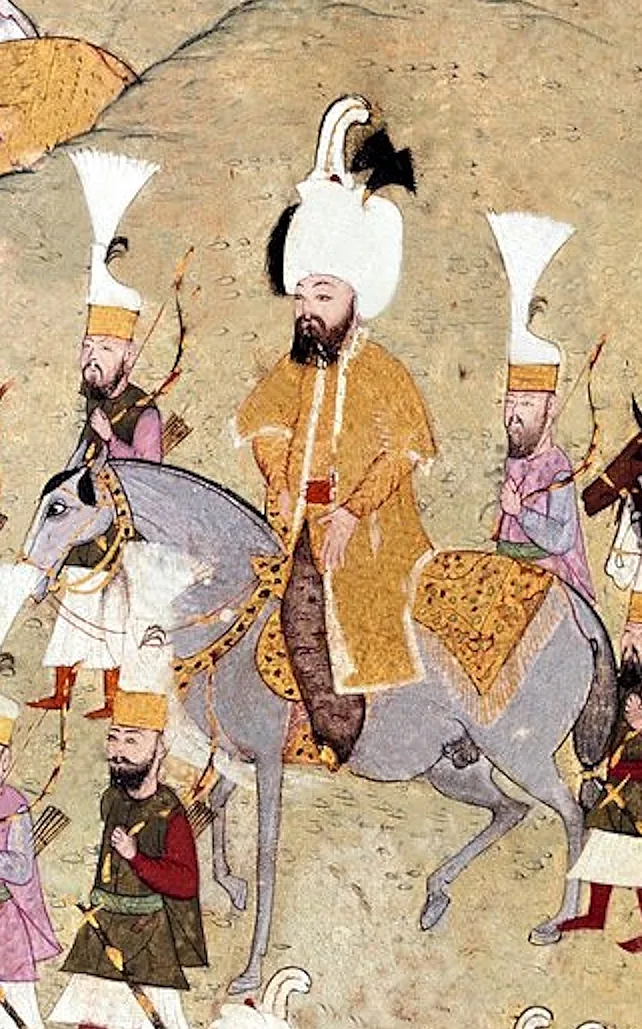
The book presents vivid examples of this diplomacy. Elizabeth and Murad III exchanged letters deliberately couched in striking theological language. Elizabeth presented herself as an enemy of "idol worship" — a reference to Catholic icons and statues — and wove a thread of doctrinal kinship between Protestantism and Islam in the face of Rome. The relationship went beyond letters to gifts. Elizabeth exchanged presents with Safiye Sultan, the powerful woman of the Ottoman court, and sent a lavish royal carriage to Istanbul. Later came a marvelous mechanical organ built by Thomas Dallam, which dazzled the Ottoman palace in 1599. Al-Mansur went further than anyone. He proposed to Elizabeth a joint military alliance against Spain, and in some correspondence his ambitions reached as far as imagining a joint conquest of the New World itself. The project never materialized, but its mere proposal overturns the map of "natural alliances" that we imagine to be fixed throughout history.
Second: Trade — Interests Before Creeds
Behind the diplomacy stood a more honest engine: commerce. Brotton documents how the English obtained Ottoman trading privileges in 1580. The Turkey Company and then the Levant Company were founded to organize the exchange of English cloth for silk, spices, and cotton. The Barbary Company managed trade with Morocco in sugar and saltpeter, the raw material of gunpowder. England's first resident ambassador, William Harborne, arrived in Istanbul to become Elizabeth's eyes and ears in the heart of the Muslim world.
The most striking detail of this chapter was scandalous in the eyes of Catholic Europe at the time: the English sold the Ottomans the tin and lead needed to cast cannon. Some of that metal was stripped from the bells of churches and monasteries dismantled by the Protestant Reformation in England. The metal of deconsecrated Catholic churches turned into Ottoman cannon facing Catholic Spain. It is hard to find a more eloquent image of interest triumphing over slogans. And the lesson a reader draws here reaches beyond the sixteenth century. When doors are closed in a nation's face, it opens new markets and new routes, and economics can cross doctrinal barriers that official rhetoric declares impenetrable.
Third: Culture — The "Other" Takes the Stage
This opening did not remain confined to ports and embassy halls; it seeped into the English imagination itself. The book traces a wave of plays in Elizabethan London built around "Turk" and "Moor" characters. They run from Christopher Marlowe's Tamburlaine to the Prince of Morocco in The Merchant of Venice. This presence peaked in Othello, the "Moor of Venice," whom Shakespeare made a noble tragic hero rather than a mere exotic "other." Brotton draws a persuasive connection between these works and the diplomatic event that captivated London in 1600. A Moroccan embassy arrived led by Abd el-Wahed ben Messaoud, who resided in the city for months. His painted portrait survives: a dignified Arab face gazing at us from the heart of Elizabethan London. Many scholars believe his presence left its mark on Shakespeare's conception of Othello a few years later.
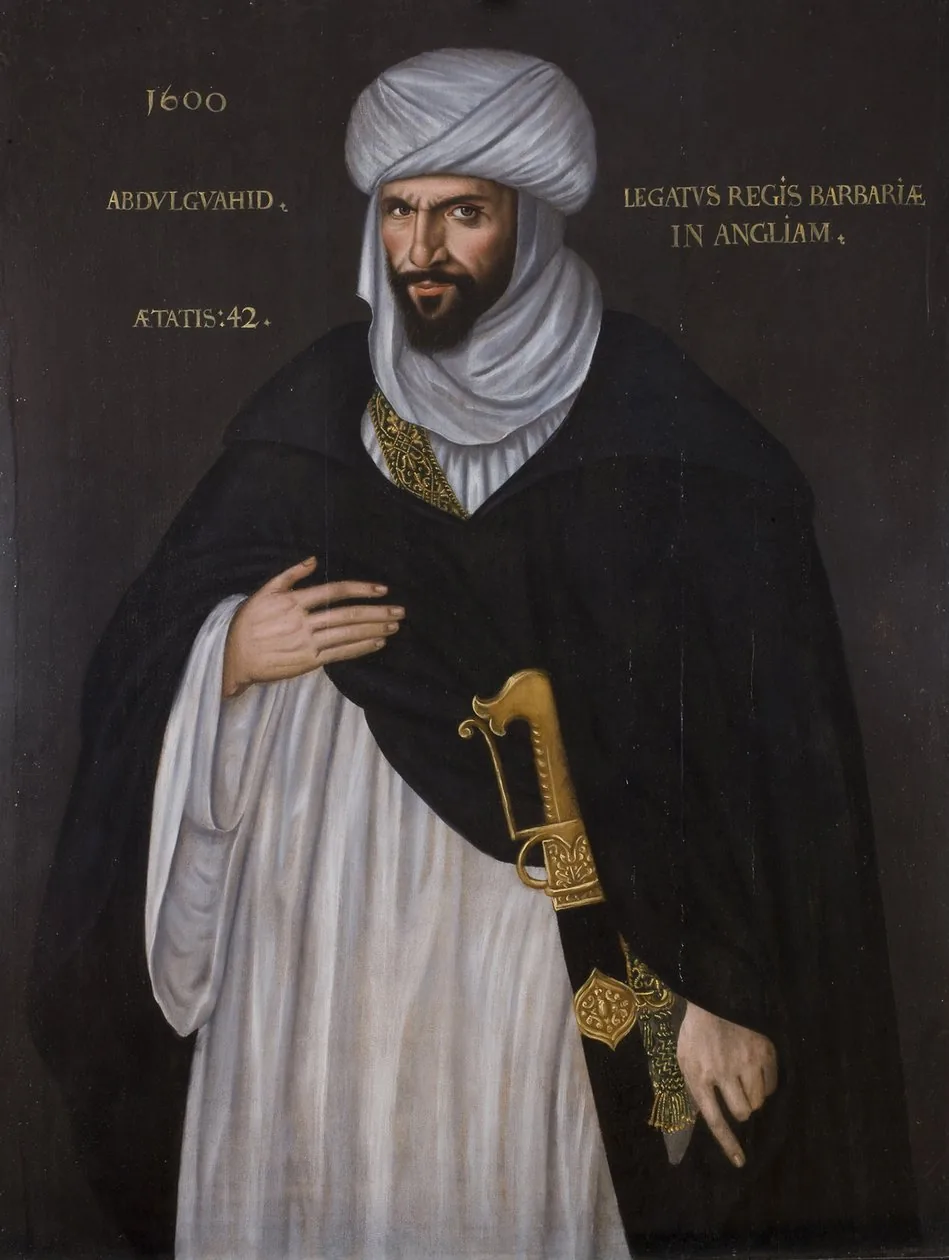
The theater here is a double mirror. In it there is fascination with Ottoman and Moroccan wealth and power, and in it there is anxiety about this near "other" now woven into markets and ports. This very duality, admiration and suspicion together, marks how cultures view one another in every age. We know it today in our view of the West just as the English knew it in their view of the East.
Conclusion: The End of a Moment, the Survival of a Lesson
With Elizabeth's death in 1603, this exceptional moment closed. Her successor James I hastened to make peace with Spain, the warmth with Istanbul and Marrakesh faded, and later narratives rewrote history as if this rapprochement had never happened. But the lesson Brotton wants to fix in place endures. Relations between civilizations were never a single battle line, but a complex web of need, interest, curiosity, fear, and admiration. The grand narratives, the "clash of civilizations" and its kin, are less an innocent description of history than a choice about what we remember of it and what we forget. Whoever reads this book can no longer see the relationship between East and West as eternal enmity. They have seen with their own eyes a Protestant queen corresponding warmly with an Ottoman sultan, a Moroccan ambassador walking the streets of London, and church-bell metal turning into cannon. Above all they have seen that history, when read from its documents rather than its slogans, is broader, stranger, and more human than we suppose.
This is a translation of an essay written in Arabic. Quotations from the Qurʾān are rendered for sense; the Arabic page carries them in the original.
NEUTRAL FACT CHECKER
The factual claims in this essay — dates, names, companies and plays — were checked against Brotton's own book and against sources independent of it. The result is published as it came out, and the essay was not edited to agree with it. The fact-check is written in Arabic: read the neutral fact-check →
© 2026 Husain Alkhaldy — published in the site's essays.