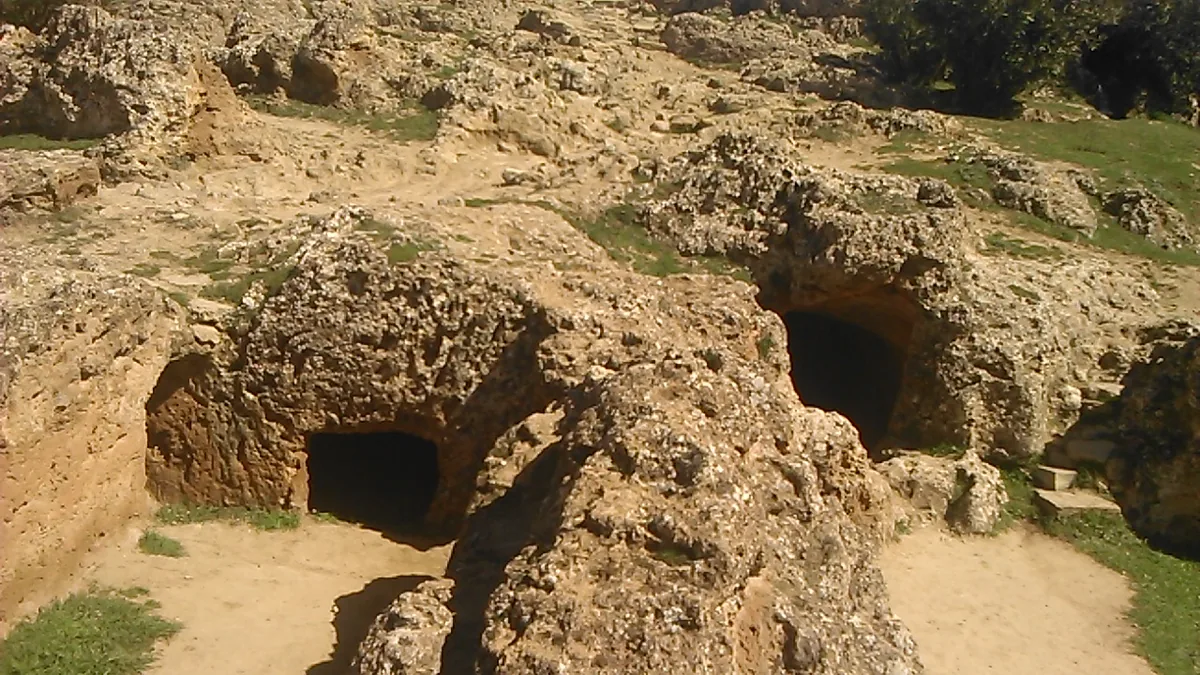
In the year 776 AH (1374 CE), Abu Hammu, the sultan of Tlemcen, gave Abd al-Rahman Ibn Khaldun a new political mission. He was to ride out to the Dawawida tribes and win them over. Ibn Khaldun set out, but he never reached them. He dropped the whole mission and turned instead to the camps of the Awlad Arif. They welcomed him, as he put it, "with warmth and honor." They sent for his family in Tlemcen, and they made his excuses to the sultan. Then they settled him in Qal'at Ibn Salama, a castle on a high plateau overlooking wide plains in the central Maghreb, near the town of Frenda in today's Algeria.
He was past forty. For more than twenty years he had lived in the courts of sultans. He had been a secretary, a chamberlain, and an envoy between kings. He had spent nearly two years in prison in Fez. He knew power from the inside, with all its plots and sudden reversals. And now he decided to leave it.
What does a man like that do in a remote castle, with no office, no court, and no rivals? Most of us would expect emptiness to eat him alive. But in his autobiography, al-Ta'rif, Ibn Khaldun described those years in a few lines:
"I stayed there four years, free of every distraction. I began writing this book while living there, and I completed its Introduction in that unusual manner to which I was guided in that retreat. Words and meanings poured down on my mind like heavy rain, until their cream was churned out and their conclusions came together."
The word he used for those years was khalwa: a retreat, a chosen solitude.
This essay asks two questions. Why does a person feel a deadly emptiness inside? And when is solitude its cure, and when is it the disease? My answer is this: emptiness is a lack of meaning, not a lack of people. Solitude heals when it is a retreat with work and direction. It kills when it is idleness with neither.
What Was Born in the Castle?
Ibn Khaldun did not leave the castle with an ordinary book. He left with the Muqaddimah, the Introduction to his great history, Kitab al-'Ibar. In it he founded a field he called 'ilm al-'umran al-bashari, the science of human civilization. Today we call it sociology.
Ibn Khaldun knew the value of what he had made, and he did not hide it. At the start of the book he wrote that in arranging it he had taken "an unusual path," and had invented "a remarkable approach, a new method and style." Then he defined his new science with the precision of a scholar describing his own field:
"It is as if this were an independent science in its own right. It has a subject, which is human civilization and social organization, and it has problems, which are the conditions that attach to it by its very nature, one after another."
He also wrote that the discussion of this subject was "newly made, unusual in direction, and rich in benefit," something that "research stumbled upon and deep diving led to." Then he swore to its novelty: "By my life, I have not come across anyone in all creation who has discussed it in this way."
This is open praise from an author for his own book. But Ibn Khaldun did not leave it as a closed claim. Right after it, he offered two possibilities: perhaps earlier scholars simply overlooked the subject, which he doubted, or perhaps they wrote about it fully and their work never reached us. He was confident in what he had found, and fair to those before him, at the same time.
And he finished it quickly. At the end of the Muqaddimah, he noted that he completed its drafting, before revision and polishing, in five months, ending in the middle of 779 AH (1377 CE).
So sociology was born in a retreat. The word "sociology" came more than four centuries later, coined by the French thinker Auguste Comte. But many historians of thought, Arab and Western alike, regard Ibn Khaldun as the field's first founder. The British historian Arnold Toynbee called the Muqaddimah the greatest work of its kind ever produced by any mind, in any time or place.
An important note: the Muqaddimah did not fall on Ibn Khaldun suddenly in the castle. The Moroccan philosopher Mohammed Abed al-Jabri argued, in The Thought of Ibn Khaldun: 'Asabiyya and the State, that its ideas grew from at least nine years of reflection before the retreat. This does not reduce the value of the retreat. It explains it. Ibn Khaldun had gathered his material over twenty years among tribes, courts, and prisons. The retreat gave him the quiet to put it in order. His own words say as much: the meanings poured in the retreat, and a flood only comes from water that has gathered before it.
So What Is Emptiness?
Many people know this feeling. You come home after a busy day. You close the door. And you find a heavy emptiness in your chest, with no clear cause. You open your phone. You move from screen to screen. Then you fall asleep, and the emptiness is still there.
The Austrian psychiatrist Viktor Frankl gave this state a name. Frankl survived the Nazi concentration camps and later wrote Man's Search for Meaning. He called the state the "existential vacuum": the feeling that life has no meaning and no purpose. He noticed it shows up most clearly on days off, so he called it "Sunday neurosis". Work stops at the weekend, and a person discovers he does not know what he wants from his life.
The emptiness here is not empty time. It is empty meaning. Free time only exposes it.
Three centuries before Frankl, the French philosopher and mathematician Blaise Pascal wrote in his Pensées that all of humanity's unhappiness comes from one thing: people do not know how to sit quietly in a room. He believed people chase entertainment and busyness so they will not have to think about themselves.
Then came the experiment. In 2014, a team at the University of Virginia led by Timothy Wilson published a study in the journal Science. They asked participants to sit alone for 6 to 15 minutes, with no phone and no book, and simply think. Most found it unpleasant. In one experiment, participants had a button that gave a mild electric shock. They had already tried the shock and said they would pay money to avoid it. Even so, 12 of 18 men and 6 of 24 women pressed the button at least once in 15 minutes.
They chose pain over being alone with their thoughts. That tells us something. We are not running from solitude itself. We are running from what we find in it. Noise works like a painkiller: it eases the pain without treating its cause. In medicine, we know the danger of a painkiller that hides a fever from both the patient and the doctor.
Emptiness After Forty
Life also has a stage when this feeling becomes common, usually after forty. People call it the "midlife crisis." The first to use the term was the Canadian psychoanalyst Elliott Jaques, in a paper published in 1965. Jaques studied the lives of many artists and creative people. He noticed that the work of many of them changed sharply in their mid-thirties and after: some stopped, and some began their greatest work. He explained it this way: at this age, a person realizes, for the first time in a real way, that his life is limited and that he will die.
What exactly happens at this age? A person has achieved most of what he planned in his youth: the degree, the job, the marriage, the house. Then he looks around and finds that the goals that filled his life are finished, or that he will never reach them. He sees his parents growing old, his children becoming independent, his body changing. And he asks a question he never had time for before: what now?
The numbers support this feeling. In 2008, the economists David Blanchflower and Andrew Oswald analyzed data from about two million people in around 80 countries. They found that life satisfaction follows a U-shape. It declines gradually from youth, hits its lowest point around the mid-forties, and then rises again with age.
An important note: lower satisfaction is one thing, and a "crisis" is another. Large American studies of midlife found that only a small share, roughly 10 to 20 percent, go through what could be called a real crisis. Most people pass through these years without collapse, and many count them among the best years of their lives. Midlife is not an inevitable crisis. But it is a time when emptiness appears for anyone who has not prepared an answer to it.
Notice that two of the men in this essay were at exactly this age. Ibn Khaldun was about forty-two when he settled in the castle. Montaigne, whom we will meet shortly, was thirty-eight when he climbed his tower. Both reached midlife having finished the first chapter of their lives. And both turned the question "what now?" into work.
The Quran makes forty a milestone, but not a crisis. God says: "Until, when he reaches his full strength and reaches forty years, he says: My Lord, enable me to be grateful for Your favor which You have bestowed upon me and upon my parents, and to do righteous work that pleases You, and make my offspring righteous for me" (al-Ahqaf 46:15). The verse contains the very concerns of this age: parents, children, and work. But they come not as anxiety. They come as gratitude, review, and prayer. In this verse, forty is not the end of the climb. It is the start of new work: "and to do righteous work that pleases You." It is the same meaning we will find in "So when you are free, strive."
When Is Emptiness an Illness?
Before going further, we need to draw a line. Not every emptiness is a question about meaning. If the feeling lasts two weeks or more, together with loss of pleasure in things that used to bring pleasure, disturbed sleep or appetite, and a sense of hopelessness or worthlessness, these are signs of depression. Depression is an illness, and it has treatment. A chronic feeling of emptiness is also one of the criteria for borderline personality disorder. In these cases, solitude is not the answer. It may even make things worse. The way forward here is a doctor.
We also need to separate retreat from loneliness. A retreat is chosen, for a purpose, and a person knows when it ends. Loneliness is imposed on a person, or he falls into it without meaning to. The harm of loneliness is medically established. In 2010, Julianne Holt-Lunstad and her colleagues combined the results of 148 studies covering more than 300,000 people. They found that people with strong social relationships had about a 50 percent greater likelihood of survival over the follow-up period. So this essay is not a call to abandon people.
Ibn Taymiyya: A Prison That Became a Retreat
Ibn Taymiyya did not choose his final solitude. He was imprisoned in the Citadel of Damascus in 726 AH (1326 CE), and he stayed there until his death in 728 AH (1328 CE). In prison he spent his time writing and reciting the Quran.
His student Ibn al-Qayyim reported, in al-Wabil al-Sayyib, that he used to say:
"What can my enemies do to me? My paradise and my garden are in my chest. Wherever I go, they are with me and never leave me. My imprisonment is a retreat, my killing is martyrdom, and my exile from my land is a journey."
The same walls that imprison one man are a retreat for another. The difference is the meaning each carries in his chest. Ibn Taymiyya found no emptiness in prison, because he entered it with what would fill his time and his heart.
Montaigne: When Solitude Breeds Monsters
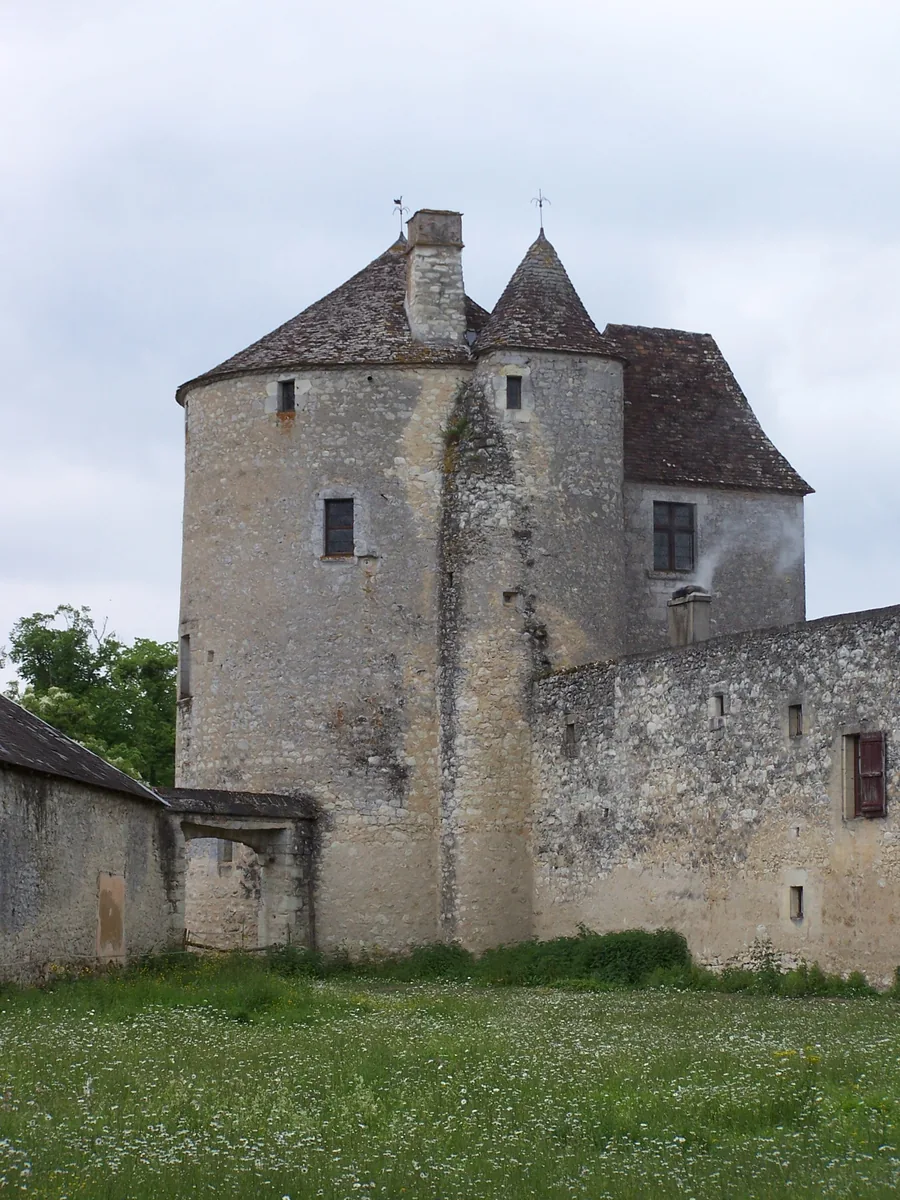
In 1571, at the age of thirty-eight, Michel de Montaigne left his post as a magistrate in Bordeaux. He climbed into a round tower on his estate and made its top floor a library. On its wall he had a Latin inscription painted, announcing his retirement from public life to spend the rest of his days in calm and freedom among his books.
Montaigne expected his mind to rest. But he admitted the opposite in a short essay titled "Of Idleness." He wrote that his mind, left with nothing to do, became like a runaway horse. It gave birth to fantasies and strange monsters, one after another, with no order. So he began to write them down, hoping that in time his mind would be ashamed of them.
From that writing came the Essays. And with it came a new literary form, the personal essay, which took its name from his book.
Montaigne's story holds two lessons. First, solitude without work does not bring rest. It breeds illusions. Second, the same solitude, once it found work, produced a form of writing that did not exist before. In the Algerian castle a science was born. In the French tower a literary form was born. Both came from a retreat that had work to do.

Thoreau: The Third Chair
On July 4, 1845, the American writer Henry David Thoreau moved into a small cabin he had built by hand on the shore of Walden Pond, near the town of Concord, Massachusetts. He lived there for two years, two months, and two days. He explained why in his book Walden: "I went to the woods because I wished to live deliberately, to front only the essential facts of life."
Fairness requires us to add that Thoreau's solitude was not in the wilderness. The cabin was about three kilometers from town. He visited his family and friends, and he received visitors. He wrote in Walden: "I had three chairs in my house; one for solitude, two for friendship, three for society."
Thoreau did not cut himself off from people. He cut off the excess. Ibn Khaldun had done the same five centuries earlier. He said he stayed in the castle "free of every distraction." He did not say free of people. His family and children were with him the whole time.
Al-Ma'arri: Solitude Without Peace
We need a counterexample. The poet Abu al-'Ala al-Ma'arri returned from Baghdad to his hometown of Ma'arrat al-Nu'man in 400 AH (1010 CE). He stayed in his house until his death in 449 AH (1057 CE), nearly half a century. He called himself "the hostage of two prisons": his blindness and his house. Then, in a poem, he added a third:
I see myself in three of my prisons, so do not ask about the hidden news:
the loss of my sight, the keeping to my house, and the soul's being held in this wretched body.
Al-Ma'arri's solitude produced great literature, including Luzum ma la Yalzam and Risalat al-Ghufran (The Epistle of Forgiveness). But his poetry stayed weighed down by a deep pessimism about life. I am not judging the man here, nor diagnosing him after the fact. I mean one thing only: solitude is a container. It gives back what you put in it. It may give you productivity. It does not necessarily give you peace.
The Islamic Tradition Weighs Solitude
Scholars of the Islamic tradition did not treat solitude as a slogan. Al-Khattabi (d. 388 AH / 998 CE) wrote a book titled al-'Uzla (Solitude). Ibn Abi al-Dunya wrote al-'Uzla wa al-Infirad (Solitude and Withdrawal). And al-Ghazali, in Ihya' 'Ulum al-Din (The Revival of the Religious Sciences), devoted a whole book to the etiquette of solitude. He listed its benefits and its harms, and concluded that the ruling differs with each person, his condition, and his time.
Their question, then, was never "Is solitude good?" It was: for whom? When? And for what?
The Balance of Revelation
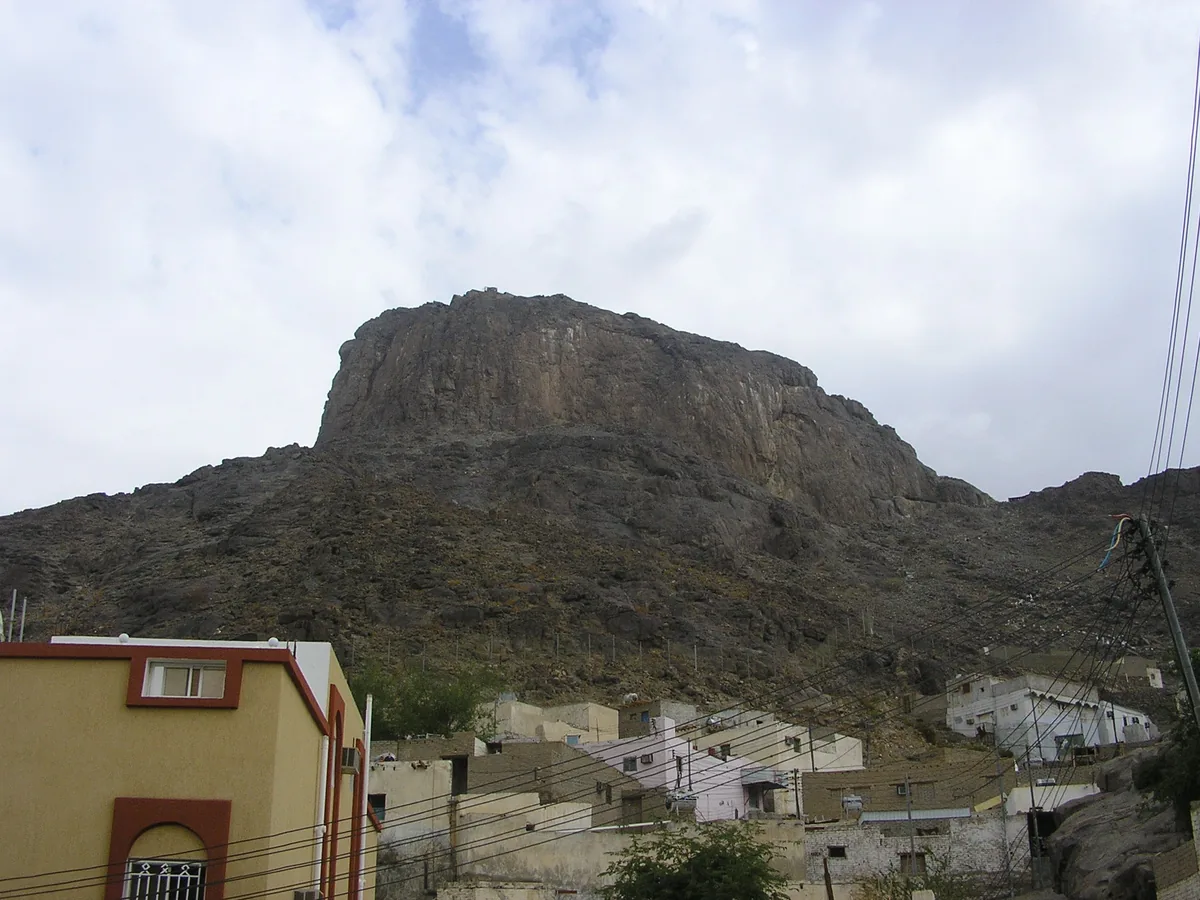
Al-Bukhari narrates, in the hadith on the beginning of revelation, from Aisha (may God be pleased with her), that the Prophet ﷺ "was made to love seclusion. He would go into seclusion in the Cave of Hira and devote himself to worship there for a number of nights, before returning to his family and taking provisions for it."
This short sentence holds four things. The retreat was loved and chosen. It had a purpose: worship. It had a length: "a number of nights." And it had a return: "before returning to his family." Then these retreats ended with a command that is the exact opposite of solitude: "Arise and warn" (al-Muddaththir 74:2). The retreat was preparation for going out to people.
In the story of Abraham, peace be upon him, he told his people: "I will withdraw from you and from what you call upon besides God, and I will call upon my Lord" (Maryam 19:48). Then came: "So when he withdrew from them and what they worshipped besides God, We gave him Isaac and Jacob, and each of them We made a prophet" (Maryam 19:49). Abraham withdrew from falsehood, and the reward of his withdrawal was not loneliness. It was family and offspring.
The same is true of the People of the Cave: "And when you have withdrawn from them and from what they worship other than God, then take refuge in the cave; your Lord will spread out His mercy for you" (al-Kahf 18:16). In both passages, the withdrawal is from idolatry and its people, not from people as such.
The Sunnah holds both sides together. In al-Bukhari: "Soon the best wealth of a Muslim will be sheep that he follows to the mountain tops and the places where rain falls, fleeing with his religion from trials." And in Sunan Ibn Majah: "The believer who mixes with people and bears their harm patiently has a greater reward than the believer who does not mix with people and does not bear their harm." Mixing with people is the rule. Solitude is the exception, and it needs a reason: a trial one flees to protect one's faith, or a retreat in which one gathers provisions and then returns.
An important note: we should not equate the Prophet's devotion in Hira with modern "meditation" retreats and wellness resorts. The resemblance is in form only: being alone and being silent. The purpose is different. The devotion in Hira was worship directed to God. The modern retreat is mostly about self-care and rest. I do not deny the benefits of the second. But a similar picture does not mean a similar reality.
"So When You Are Free, Strive"
At the end of Surat al-Sharh, after the repeated promise, "For indeed, with hardship comes ease. Indeed, with hardship comes ease," comes the command: "So when you are free, strive. And to your Lord direct your longing" (al-Sharh 94:7–8).
In Arabic, faragha means to finish something and be empty of it. Nasiba means to tire oneself and work hard; from it comes nasab, fatigue. So the literal meaning is: when you finish one task, tire yourself in another.
The classical commentators differed on which task is meant. Al-Tabari collected their views in Jami' al-Bayan. Ibn Abbas said: when you finish your prayer, strive in supplication. Mujahid said: when you finish your worldly affairs, stand up to worship your Lord. Al-Hasan said: when you finish fighting, strive in worship. Al-Tabari chose the general meaning: whenever you finish any work you were busy with, worldly or religious, then strive in the worship of your Lord.
What stands out in this verse is that it does not treat free time as a station to stop at. Free time here is a hinge between two efforts. It does not say, "When you are free, rest." It says, "When you are free, strive." Then the next verse gives the direction: "And to your Lord direct your longing." In the Arabic, "to your Lord" comes before the verb, which signals exclusivity: make your longing for Him alone. The effort in this verse is not motion without direction.
These two verses hold the cure for the emptiness we described at the start. Emptiness has two forms. The first is idleness without work: Montaigne's runaway horse. The second is motion without direction: moving from screen to screen until midnight. The two verses treat both together: "strive" for the first, and "direct your longing" for the second.
A reader may ask: how can free time be deadly, when the Prophet ﷺ counted it as a blessing? He said: "There are two blessings in which many people are cheated: health and free time" (al-Bukhari). The answer lies in the word "cheated." To be cheated is to sell something for less than it is worth. Free time is a blessing when it is used, and a loss when it is left alone. It is raw material. Deadly emptiness is that raw material left unworked.
A saying is attributed to Abdullah ibn Mas'ud (may God be pleased with him): "I hate to see a man idle, busy with nothing of the work of this world or the work of the Hereafter." Notice that he condemned idleness of both kinds. Useful worldly work also fills empty time. The cure is not limited to private worship.
A retreat with effort and longing is the place for the deep reflection (tafakkur) that the Quran praises, as I explained in my essay "Between Thinking and Reflection."
A Prescription
- Measure the emptiness before treating it. Sit for fifteen minutes with no phone and no book. What you find in those minutes was not created by the silence. The silence only revealed it.
- Check the warning signs. If the emptiness lasts two weeks or more, with loss of pleasure, disturbed sleep or appetite, and hopelessness, start with a doctor, not with solitude.
- Withdraw from distractions, not from people. These are Ibn Khaldun's own words, and his family was with him. Remember Thoreau's three chairs.
- Give your retreat work. Writing, reading, a project, or reflection. A retreat without work is Montaigne's runaway horse.
- Give it direction. Before you withdraw, ask yourself: why am I withdrawing, and for what? "And to your Lord direct your longing."
- Give it a time limit. "A number of nights." An hour a day, a day a week, or a set period for a single project.
- When you are free, strive. Do not let the gap between two tasks grow long. Plan the next task before you finish the current one.
- Come back with what you found. A successful retreat ends among people, and you bring something to give them.
Back to the Castle
In 780 AH (1378 CE), Ibn Khaldun came down from Qal'at Ibn Salama. He had finished the Muqaddimah, but the history itself needed books and records found only in great cities. So he traveled to Tunis. There he completed his history of the Berbers and the Zanata, and presented a copy to the sultan's library.
The retreat gave him what a retreat can give: the idea. Completing the idea required people and books once again. After four years, Ibn Khaldun came down from the castle into the cities, the sultans, and the rivals once more. But he came down with the Muqaddimah in his hand.
Further Reading
- Ibn Khaldun, al-Muqaddimah, the Introduction to Kitab al-'Ibar wa Diwan al-Mubtada' wa al-Khabar.
- Ibn Khaldun, al-Ta'rif bi-Ibn Khaldun wa Rihlatihi Gharban wa Sharqan (his autobiography).
- Mohammed Abed al-Jabri, Fikr Ibn Khaldun: al-'Asabiyya wa al-Dawla (The Thought of Ibn Khaldun: 'Asabiyya and the State).
- Sati' al-Husri, Dirasat 'an Muqaddimat Ibn Khaldun (Studies on Ibn Khaldun's Muqaddimah).
- Ibn al-Qayyim, al-Wabil al-Sayyib min al-Kalim al-Tayyib.
- Al-Tabari, Jami' al-Bayan 'an Ta'wil Ay al-Qur'an, commentary on Surat al-Sharh.
- Al-Khattabi, al-'Uzla; and al-Ghazali, Ihya' 'Ulum al-Din, The Book of the Etiquette of Solitude.
- Viktor E. Frankl, Man's Search for Meaning.
- Blaise Pascal, Pensées.
- Michel de Montaigne, Essays, Book I, "Of Idleness."
- Henry David Thoreau, Walden; or, Life in the Woods (1854).
- Wilson TD, Reinhard DA, Westgate EC, et al. Just think: The challenges of the disengaged mind. Science. 2014;345(6192):75–77.
- Jaques E. Death and the mid-life crisis. International Journal of Psycho-Analysis. 1965;46:502–514.
- Blanchflower DG, Oswald AJ. Is well-being U-shaped over the life cycle? Social Science & Medicine. 2008;66(8):1733–1749.
- Holt-Lunstad J, Smith TB, Layton JB. Social relationships and mortality risk: a meta-analytic review. PLoS Medicine. 2010;7(7):e1000316.
This is a translation of an essay written in Arabic. Quotations from the Qurʾān are rendered for sense; the Arabic page carries them in the original.
NEUTRAL FACT CHECKER
The essay's facts were checked against their sources: most of its quotations and dates hold, but two figures it gives from midlife studies are not in those studies, and its account of how the retreats at Hira ended skips a step. The result is published as it came out, and the essay was not edited to agree with it. The fact-check is written in Arabic: read the neutral fact-check →
© 2026 Husain Alkhaldy — published in the site's essays.