Those who know are not puzzled when they see some of the powerless gloating over our country when harm comes to it. It is nothing new for plots to be laid against the land of goodness and the citadel of Islam, the Kingdom of Saudi Arabia. This has been its lot since it was founded. God, exalted in His majesty, has spared us the plots of the schemers for as long as we hold to His Book and to the Sunna of His Prophet ﷺ: ﴿and it was ever Our duty to help the believers﴾.
In this piece I am not speaking of how world Zionism, malign Safavism and their hangers-on among the basest of the Arabs join forces to plot against this secure land. These are an open, declared enemy, like the two states of Persia and Byzantium, with their Lakhmids and their Ghassanids, in the time of the Prophet ﷺ and the first Companions. Those fell, and these will fall: a promise binding on us, and true. I mean rather those beneath them, whose provision has been straitened: ﴿Say: my Lord gives provision in plenty to whom He wills, and gives it in measure﴾. And this despite the good and the help given to them before, out of desire for what lies with God, and despite the pardon and forbearance offered to them again and again: ﴿Let not those among you who have been given bounty and means swear off giving to their kin, to the needy and to those who emigrated in the way of God. Let them pardon and overlook. Do you not love that God should forgive you? And God is Forgiving, Merciful﴾. Some good-hearted people may be surprised that this is how kindness is repaid, even by those who live among us, settle among us and earn their living among us. This piece is not a survey of the incidents (and how many there are!), nor a tally of what went before: ﴿We feed you only for the sake of God. We want from you neither reward nor thanks﴾. It is a review of the psychological and structural sides of the matter that drive people like these to such shameful acts. It is also an answer to a question some good-hearted people ask: why do giving and kindness not soften this hatred, but make it worse?
We ask God to set right the affairs of our neighbours, and to draw the rancour and the grudges out of their hearts.
Introduction
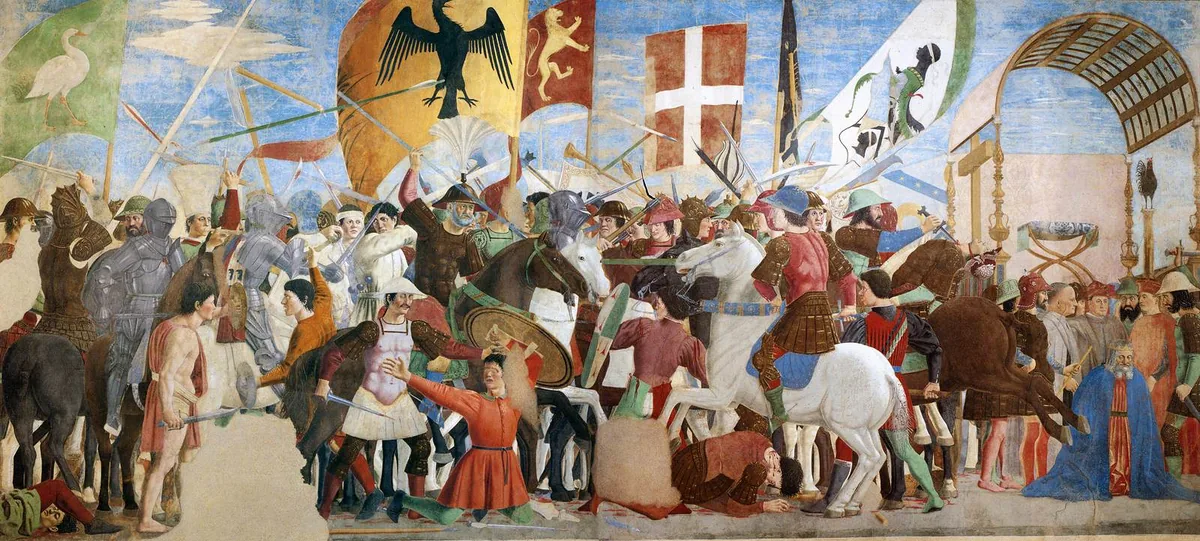
Around 614 CE the news reached Mecca. The armies of Khosrow had overrun Syria. They had entered Jerusalem and carried the Cross of the Christians away with them to al-Madāʾin, the Persian capital. The greatest state the Arabs knew was crumbling, one city after another.
Quraysh rejoiced. They had no kinship with Persia and no alliance with it, but they saw themselves in it: a people with no scripture, who did not believe in a resurrection. The Muslims grieved. They were then a small, weak band in Mecca, and the Byzantines were People of the Book like them. The people of Mecca split over a disaster that had not happened on their soil. They lost not a single dirham in it, and gained none. One party rejoiced and the other grieved, and the event was far from both of them.
Then the verses came down: ﴿Alif Lām Mīm. The Byzantines have been defeated in the nearest land. After their defeat they will prevail, within a few years﴾. Abū Bakr went out reciting them around Mecca. A group of men from Quraysh stopped him and said: “Your companion claims the Byzantines will beat Persia? Then let us bet on it.” Abū Bakr named six years, and they laid the wager. Betting had not yet been forbidden. The six years passed, and the polytheists took the stake. Then, as the seventh year began, the Byzantines won. The Muslims blamed Abū Bakr. “Why did you name six,” they said, “when God says a few years?”
The same verses promise another joy: ﴿On that day the believers will rejoice in God's help﴾. So there are two joys here: joy at the fall of a nation, and joy at its rise.
Joy with Nothing to Gain
There is a small detail in the scene: Quraysh gained nothing from Persia's victory and lost nothing from the Byzantines' defeat. Their caravans still went up to Syria in the summer, as they always had. Their markets still stood, and their idols were still in their places. Even so, they rejoiced openly, so openly that they bet camels on the outcome. Joy at a gain is easy to understand, and so is grief at a loss. But joy at the fall of a nation to which you have no tie of interest and no direct quarrel needs explaining.
Psychology calls this emotion schadenfreude: pleasure at someone else's misfortune. When the misfortune falls on a group rather than a person, and the one gloating is also a group rather than a person, it is called intergroup schadenfreude. Al-Qurṭubī's reading of the scene is precise. In his view Quraysh wanted Persia to win “because they and the Persians were neither people of scripture nor believers in a resurrection.” In other words, Quraysh saw their own image in Persia. They did not rejoice for Persia. They rejoiced for themselves, victorious in someone else's shape. A group gloats only over those it measures itself against, and in truth it rejoices only for itself.
In Majmūʿ al-Fatāwā, his collected fatwas, Ibn Taymiyya distinguished two kinds of envy. The first is resenting another's blessing outright. The one who feels it “takes pleasure in the blessing passing away from the other, even if he gains no benefit from its passing.” That is exactly the joy of Quraysh. The second is when a man resents another's advantage over him and wants to be like him, or better, without wishing him to lose what he has. Some called this ghibṭa (emulation), and the Prophet ﷺ called it envy in the hadith “There is no envy except in two cases.” Close to this division is the line that van de Ven and his two colleagues drew in 2009. On one side is “benign” envy, which pushes a person to rise to the other's level. On the other is “malicious” envy, which pushes him to pull the other down from it.
Group Envy Is Not a Sum of Grudges
In 2008 the psychologists Colin Wayne Leach and Russell Spears published a study titled “A vengefulness of the impotent,” a phrase they borrowed from the German philosopher Friedrich Nietzsche. In it they asked a simple question: when does a group rejoice at another group's misfortune? The answer came in three steps. First, the group feels it is lower than others. Next, it cannot change that order by its own effort. Then the higher group falls or stumbles, and the lower group finds in its fall a relief it could not make for itself. Schadenfreude is a symbolic compensation for a real powerlessness. That is what “the vengefulness of the impotent” means.
They added a more important point: the more tightly a person is tied to his group, the more he gloats. In an earlier study, in 2003, Leach and his colleagues measured how much Dutch football fans enjoyed the German national team's losses. They found the pleasure was stronger among those who felt their own country was inferior at the game, and among those whose sense of belonging was stronger. The one gloating in this case gains nothing, just as Quraysh gained nothing.
This is why individual psychology is not enough to understand why nations gloat. A group does what a single person would be ashamed to do. Had you asked a man of Quraysh in private, “Are you glad that the Christians of Syria are killed and their women taken captive?”, he might well have hesitated. But in the market, among his own people, he rejoiced and he placed his bet. Belonging washes a shameful emotion clean and brings it out as a noble feeling: standing by our own.
So when strong belonging meets a sense of inferiority, group envy becomes fuel waiting for a spark. A single match is enough: the neighbour stumbling.
Why the Nearest Neighbour?
Quraysh did not rejoice because some nation at the far end of the earth had beaten another nation they knew nothing of. They rejoiced because one neighbour had beaten another. The oldest observation on this is Sigmund Freud's, which he called “the narcissism of small differences.” He noticed that the fiercest hostilities break out between groups that live side by side and look alike: the Spanish and the Portuguese, the English and the Scots, the people of northern and southern Germany. The reason is that we compare ourselves only with those who resemble us. A peasant does not measure himself against the king. He measures himself against the peasant next door. In the same way, a nation does not measure itself against a nation on another continent that speaks a language it cannot follow. It measures itself against its neighbour, the one that shares its tongue, its religion and its history. So the nearest neighbour is the clearest mirror, and the clearest mirror is the one that hurts most when it shows us what we lack.
Al-Ghazālī (d. 505 AH / 1111 CE) had made the same observation some eight centuries before Freud. In Iḥyāʾ ʿulūm al-dīn he gave it a section of its own: “On the reason envy is so common among equals and peers, brothers, cousins and relatives.” But his explanation is not Freud's. For al-Ghazālī, envy grows among people who compete for the same goal, not among people who are simply alike. The causes of envy, he writes, “abound only among people bound by ties that bring them together in the same gatherings and send them after the same aims.” After all, “there is no tie between two persons in two distant towns, so there is no envy between them.” And so “you see the scholar envy the scholar and not the worshipper, and the worshipper envy the worshipper and not the scholar. The merchant envies the merchant. Indeed, the cobbler envies the cobbler, and does not envy the cloth-merchant except for some reason other than sharing a trade. And a man envies his brother and his cousin more than he envies strangers.”
Hence a painful paradox: the closeness we expect to soften envy is the very thing that charges it. Being brothers in language and religion does not prevent gloating. It makes it worse, because the comparison is clearer and the sense of inferiority cuts deeper.
Which Nations Are Envied?
Not every nation is a target of envy. In 2002 the psychologist Susan Fiske and her colleagues put forward a model that sorts groups along two dimensions: competence and warmth. The group that people see as high in competence and low in warmth, that is, successful but cold or aloof, is the group that gets envied. The rich, the successful and the advanced all fall in this quarter of the model. A later study by Mina Cikara with Fiske, in 2012, measured the muscles of the face. It showed that people smile when a small misfortune strikes one of these envied groups, and smile more than they do at the misfortune of any other group. Group envy, then, is a tax on success. It is paid simply for being seen to succeed, not for any particular act.
The Paradox of Giving Between Nations
Why does giving not ease envy? Why, indeed, does it sometimes make it worse? A nation comes to its neighbour's aid in a crisis. It opens its doors to the neighbour's workers, lends to it and makes it gifts. It expects thanks, and it meets with slander. As the old Arab proverb has it: “Beware the evil of the one you have been good to.”
The French sociologist Marcel Mauss explained this paradox in 1925, in his book on the gift. For Mauss, a gift is not an innocent present. It binds the one who takes it to three things: to accept, to give thanks, and to return. Whoever cannot return the gift stays in debt, and the debtor stands lower than the creditor. So a gift that is never returned fixes the rank between giver and taker, and makes that rank public. The more is given, the greater the debt, and the more the taker feels his inferiority. This is where “the vengefulness of the impotent” comes in. The one who cannot repay a kindness can still gloat when his benefactor stumbles. It is the only way left to him of settling the account.
Gratitude and indebtedness are different feelings, even though this obligation joins them. Watkins and his colleagues ran two studies in 2006. They found that the more a giver showed that he expected something back, the more the receiver felt indebted and the less grateful he was. Indebtedness pushes a person away from the giver, while gratitude draws him closer.
Mauss explains why debt weighs so heavily, but he does not tell one kind of giving from another. That distinction was drawn by the psychologist Arie Nadler of Tel Aviv University, who studied help between groups as a relation of status. For Nadler, help comes in two kinds. One solves the problem for the receiver and hands him the answer ready-made; he calls this “dependency-oriented” help. The other gives the receiver the tool to solve it himself; he calls this “autonomy-oriented” help. In 2006 he and Halabi published four experiments, two of them on Arabs and Jews who are citizens of the usurping entity. The people least willing to accept help from the higher-status group were those most attached to their own group. This held when they saw the status order between the two groups as open to change, and when the help was dependency-oriented. What they rejected in these experiments was not giving as such. It was the giving that keeps the receiver in need. Among all the modern studies this essay cites, there is not a single Gulf sample. Their samples are Western or Israeli, and the nearest to us are these Arabs who are citizens of the usurping entity.
As for the giver, Nadler studied him with two colleagues in 2009, using 255 Israeli high-school students. He found that members of the higher group, when they feel their status is unstable, give the lower group dependency-oriented help rather than autonomy-oriented help. They protect their status through the very act of giving. He called this “defensive helping.” When the participants were reminded of a shared identity that took in both groups, their choice switched to autonomy-oriented help.
All of this leaves a tension with the words of God Most High: ﴿The good deed and the evil deed are not alike. Repel evil with what is better, and the one between whom and you there was enmity will be as though he were a devoted friend﴾. The verse promises that repelling evil with what is better makes an enemy as though he were a devoted friend. What Mauss and Nadler describe is kindness that deepens enmity. And the next verse does not make the matter easy: ﴿None is granted it but those who are patient, and none is granted it but one of great good fortune﴾.
None of this excuses ingratitude. It explains why ingratitude keeps coming back. And understanding is the first step toward a cure.
The Mask
A person who envies knows that he envies, and he is ashamed, so he hides it. A group never gloats in the name of envy. It gloats in the name of justice. It says: they are oppressors, and what has befallen them is a punishment they earned. Leach saw this in his chapter on anger about inequality. He found that this anger has three sources: envy, the feeling of inferiority, and the feeling of injustice. The most dangerous is the third, because it gives the first two licence to come out into the open. Envy declared is a disgrace. Anger at injustice is an honour.
Nietzsche got there first, in On the Genealogy of Morality in 1887. He described how the weak turn their inability to strike back into a virtue, and their grudges into a morality. We need not accept the whole of Nietzsche's philosophy. In the essay “And They Will Not Cease to Differ” I discussed how the mind rebuilds reality to fit what it wants. Here it is enough to notice the mechanism. The group that envies does not say “I envy.” It says “I am wronged.”
In a 2002 experiment by Feather and Sherman on 184 university students, envy did not predict gloating at the fall of a high-achieving student. What predicted it was resentment of an achievement the participants thought undeserved. Van Dijk and his colleagues found in 2005 that gloating grows stronger the more a misfortune seems deserved. Al-Ghazālī described the same trick under the first of his causes of envy, which is enmity. Of the man who hates, he wrote: “And he may put it down to his own honour in the sight of God Most High. Whenever a calamity strikes his enemy he rejoices at it, and takes it for God's reward to him for his hatred, and thinks it happened for his sake.” He cited as proof the verse from which this essay takes its title: ﴿If good touches you, it grieves them; and if harm comes to you, they rejoice﴾.
This puts anyone who writes on the subject in a bind. If I write about others gloating over us, listing our grievances and counting the kindness we showed that was met with ingratitude, I fall into the very thing I am warning against. The essay itself becomes a collective emotion washed clean and dressed as justice. So this essay stops at the dissection and leaves the application to the reader, who has examples enough.

Further Reading
- Smith, R. H. (Ed.). (2008). Envy: Theory and Research. New York: Oxford University Press.
- Leach, C. W. (2008). Envy, inferiority, and injustice: Three bases of anger about inequality. In R. H. Smith (Ed.), Envy: Theory and Research (pp. 94–116). Oxford University Press.
- Leach, C. W., & Spears, R. (2008). "A vengefulness of the impotent": The pain of in-group inferiority and schadenfreude toward successful out-groups. Journal of Personality and Social Psychology, 95(6), 1383–1396.
- Leach, C. W., Spears, R., Branscombe, N. R., & Doosje, B. (2003). Malicious pleasure: Schadenfreude at the suffering of another group. Journal of Personality and Social Psychology, 84(5), 932–943.
- Fiske, S. T., Cuddy, A. J. C., Glick, P., & Xu, J. (2002). A model of (often mixed) stereotype content. Journal of Personality and Social Psychology, 82(6), 878–902.
- Cikara, M., & Fiske, S. T. (2012). Stereotypes and schadenfreude: Affective and physiological markers of pleasure at outgroup misfortunes. Social Psychological and Personality Science, 3(1), 63–71.
- Feather, N. T., & Sherman, R. (2002). Envy, resentment, schadenfreude, and sympathy: Reactions to deserved and undeserved achievement and subsequent failure. Personality and Social Psychology Bulletin, 28(7), 953–961.
- van Dijk, W. W., Ouwerkerk, J. W., Goslinga, S., & Nieweg, M. (2005). Deservingness and schadenfreude. Cognition and Emotion, 19(6), 933–939.
- van de Ven, N., Zeelenberg, M., & Pieters, R. (2009). Leveling up and down: The experiences of benign and malicious envy. Emotion, 9(3), 419–429.
- Watkins, P. C., Scheer, J., Ovnicek, M., & Kolts, R. (2006). The debt of gratitude: Dissociating gratitude and indebtedness. Cognition and Emotion, 20(2), 217–241.
- Nadler, A., & Halabi, S. (2006). Intergroup helping as status relations: Effects of status stability, identification, and type of help on receptivity to high-status group's help. Journal of Personality and Social Psychology, 91(1), 97–110.
- Nadler, A., Harpaz-Gorodeisky, G., & Ben-David, Y. (2009). Defensive helping: Threat to group identity, ingroup identification, status stability, and common group identity as determinants of intergroup help-giving. Journal of Personality and Social Psychology, 97(5), 823–834.
- Sigmund Freud, Civilization and Its Discontents, 1930 (Das Unbehagen in der Kultur).
- Marcel Mauss, The Gift, 1925 (Essai sur le don).
- Friedrich Nietzsche, On the Genealogy of Morality, 1887 (Zur Genealogie der Moral).
- al-Tirmidhī, al-Jāmiʿ, chapters on Qurʾānic exegesis, the chapter on Sūrat al-Rūm, the hadith of Niyār ibn Mukram al-Aslamī.
- al-Qurṭubī, al-Jāmiʿ li-aḥkām al-Qurʾān, commentary on the opening of Sūrat al-Rūm.
- Ibn Kathīr, Tafsīr al-Qurʾān al-ʿaẓīm, Sūrat al-Rūm.
- al-Ghazālī, Iḥyāʾ ʿulūm al-dīn, the book on the censure of anger, rancour and envy, 3/192–194.
- Ibn Taymiyya, Majmūʿ al-Fatāwā, the section “Among the diseases of the heart is envy”, 10/111–113.
This is a translation of an essay written in Arabic. Quotations from the Qurʾān are rendered for sense; the Arabic page carries them in the original.
NEUTRAL FACT CHECKER
The facts in this essay were checked against their sources: the hadith of Niyār ibn Mukram in al-Tirmidhī and al-Qurṭubī, the chapters on envy by al-Ghazālī and Ibn Taymiyya, Nietzsche and Freud in German, and the psychology papers the essay cites. A citation scan was also run. The result is published as it came out, and the essay was not edited to agree with it. The fact-check is written in Arabic: read the neutral fact-check →
© 2026 Husain Alkhaldy — published in the site's essays.